

As a supplier of jumping boards, I often get asked the question: "What is the maximum height I can jump on a jumping board?" This is a fascinating topic that combines physics, engineering, and the practical aspects of using these fun and beneficial pieces of equipment. In this blog post, I'll delve into the factors that determine the maximum jump height on a jumping board and provide some insights based on our experience in the industry.
Understanding the Basics of Jumping Boards
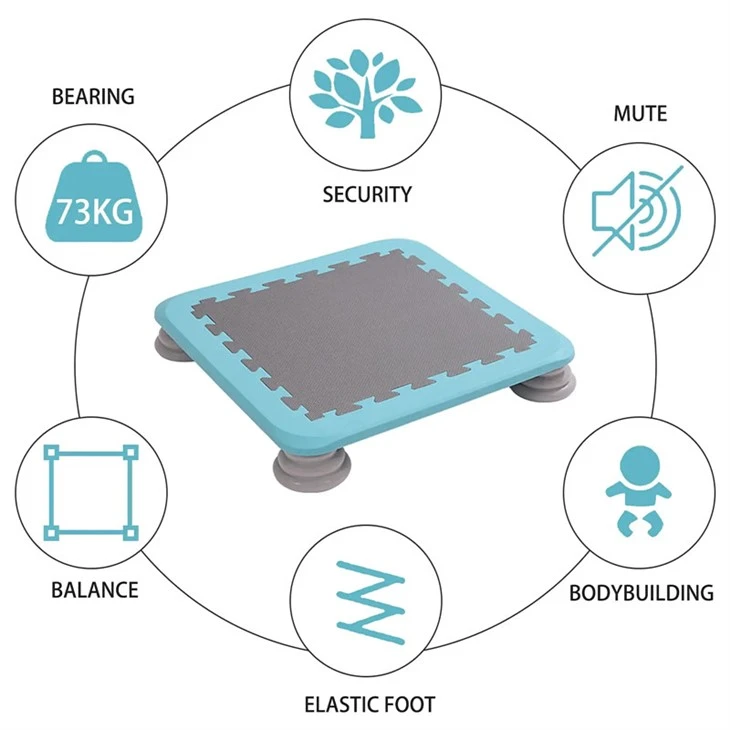
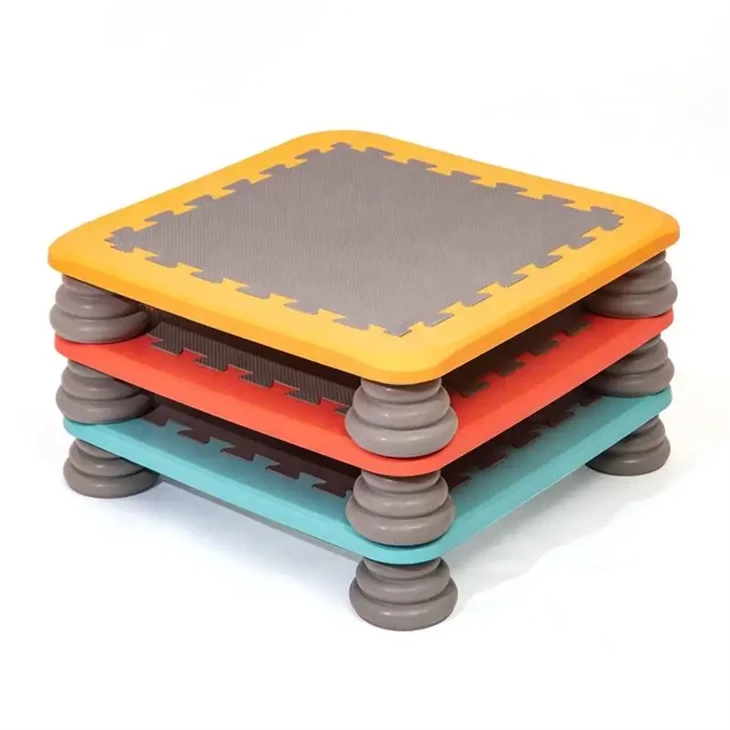
Jumping boards come in various types and designs, each with its own unique characteristics. There are Jumping Hopping Toys that are designed for a more playful and energetic experience, Toddler Bouncing Board which are specifically tailored to the needs of young children, and even boards used for Autisms Kids Sensory Integration Training. Despite their differences, they all operate on the principle of converting potential energy into kinetic energy.
When a person stands on a jumping board and bends their knees, they are storing potential energy in their muscles and the elastic components of the board. As they push off, this potential energy is released, propelling them into the air. The maximum height a person can reach depends on several key factors, which we'll explore in more detail below.
Factors Affecting Jump Height
1. The Elasticity of the Jumping Board
The elasticity of the jumping board is one of the most crucial factors. A more elastic board can store more potential energy when it is compressed and then release it more efficiently, resulting in a higher jump. Our jumping boards are carefully engineered to have the optimal level of elasticity. We use high - quality materials that can withstand repeated use while maintaining their elastic properties. For example, the springs or elastic components in our boards are designed to have a specific spring constant, which determines how much force is required to compress them and how much energy they can store.
2. The User's Strength and Technique
The strength and technique of the person using the jumping board also play a significant role. A person with stronger leg muscles can generate more force when pushing off the board, which translates into a higher jump. Additionally, proper jumping technique is essential. Bending the knees deeply before jumping allows the user to store more potential energy in their muscles. A smooth and coordinated movement, where the user extends their legs fully at the right moment, can maximize the transfer of energy from the body to the board and then into the jump.
3. The Weight of the User
The weight of the user affects the maximum jump height in a somewhat complex way. On one hand, a heavier person can potentially store more energy in the board due to their greater mass. However, they also require more energy to be lifted into the air. There is an optimal weight range for each type of jumping board. Our boards are designed to accommodate a wide range of weights, but it's important to note that extreme weights may affect the performance. For example, if a person is significantly heavier than the recommended weight limit, the board may not be able to provide enough elasticity to achieve a high jump, and it may also put excessive stress on the board's components.
4. The Design and Construction of the Jumping Board
The overall design and construction of the jumping board can impact the jump height. Factors such as the shape of the board, the distribution of weight, and the stability of the base all matter. A well - designed board will have a balanced weight distribution, which allows for a more efficient transfer of energy. Our boards are designed with a stable base to ensure that the user can jump safely and effectively. The shape of the board is also optimized to provide the best possible platform for jumping, with a smooth surface that allows for easy movement.
Calculating the Maximum Jump Height
While it's difficult to give an exact maximum jump height for all users on all jumping boards, we can use some basic physics principles to estimate it. The potential energy stored in a spring (or the elastic component of the board) is given by the formula (PE=\frac{1}{2}kx^{2}), where (k) is the spring constant and (x) is the displacement of the spring from its equilibrium position. When the user jumps, this potential energy is converted into gravitational potential energy (PE = mgh), where (m) is the mass of the user, (g) is the acceleration due to gravity ((g = 9.8m/s^{2})), and (h) is the height of the jump.
By equating these two equations (\frac{1}{2}kx^{2}=mgh), we can solve for (h). However, this is a simplified model, as it does not take into account factors such as air resistance, the energy lost in the transfer between the board and the user, and the inefficiencies in the user's movement.
Real - World Examples
In our experience, a child using one of our Toddler Bouncing Board can typically achieve a jump height of around 10 - 20 centimeters. This is due to their smaller size and lower strength. For an adult using a standard Jumping Hopping Toys, with proper technique and a well - functioning board, jump heights of 30 - 50 centimeters are possible.
It's important to note that these are just rough estimates, and the actual jump height can vary depending on the factors mentioned above. For users involved in Autisms Kids Sensory Integration Training, the focus is often more on the sensory experience and the development of motor skills rather than achieving a high jump.
Safety Considerations
When using a jumping board, safety should always be the top priority. Regardless of how high a person can jump, it's essential to follow the safety guidelines. Our jumping boards come with clear instructions on weight limits, proper use, and maintenance. We recommend that users wear appropriate footwear to ensure good traction on the board. Additionally, the jumping area should be clear of any obstacles to prevent injuries.
Conclusion
In conclusion, the maximum height a person can jump on a jumping board is determined by a combination of factors, including the elasticity of the board, the user's strength and technique, their weight, and the design of the board. Our jumping boards are designed to provide a safe and enjoyable jumping experience, whether it's for kids' play, sensory integration training, or just a fun way to get some exercise.
If you're interested in purchasing a high - quality jumping board for your home, school, or therapy center, we'd love to hear from you. We offer a wide range of jumping boards to suit different needs and budgets. Contact us today to start the procurement process and let's discuss how our products can meet your requirements.
References
- Halliday, D., Resnick, R., & Walker, J. (2014). Fundamentals of Physics. Wiley.
- McGinnis, P. M. (2012). Biomechanics of Sport and Exercise. Human Kinetics.