

How to Make a Playground More Challenging for Active Toddlers
As a supplier of Toddler Playground, I've witnessed firsthand the joy and excitement that well - designed playgrounds bring to toddlers. Active toddlers are full of energy and curiosity, constantly seeking new challenges and experiences. A playground that caters to their needs not only provides a fun environment but also promotes physical, cognitive, and social development. In this blog, I'll share some effective ways to make a playground more challenging for these little adventurers.
1. Incorporate Multi - Level Structures
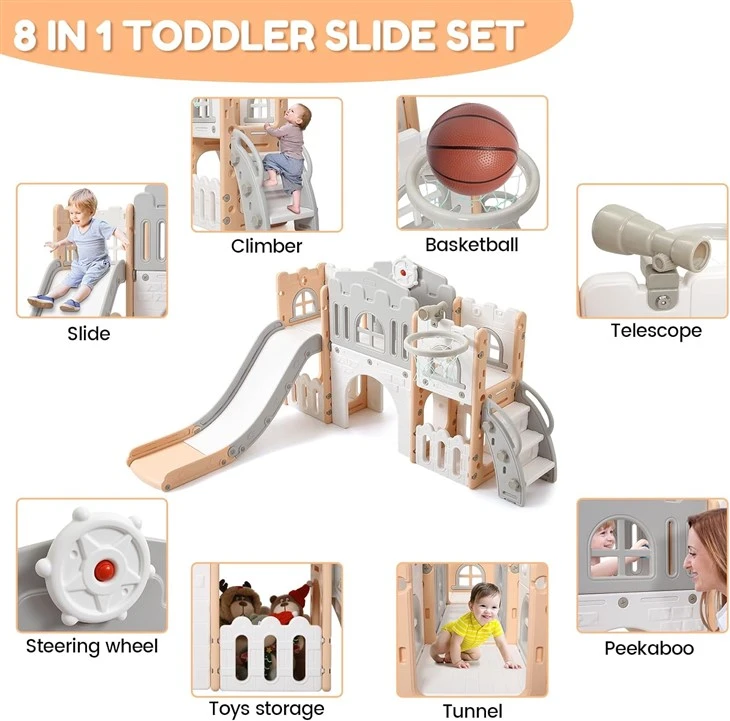
One of the most effective ways to add challenge to a toddler playground is by including multi - level structures. Toddlers love to climb, explore different heights, and have a sense of achievement when they reach the top. A multi - level play structure can include platforms at different heights, connected by ladders, stairs, or ramps.
For example, a Toddler Slide and Swing Set that has a two - or three - level platform allows toddlers to practice their climbing skills. As they ascend to higher levels, they develop strength in their arms and legs. At the same time, they learn to balance and coordinate their movements. When they reach the top, they can then enjoy the thrill of sliding down, which also helps with their vestibular development.
2. Add Obstacle Courses
Obstacle courses are a great addition to a toddler playground. They can be designed to include a variety of challenges such as crawling through tunnels, stepping over small hurdles, and walking on balance beams. Obstacle courses encourage toddlers to think critically as they figure out how to navigate through each section.
For instance, you can set up a simple obstacle course using soft, padded tunnels and low - lying balance beams. Toddlers will have to use their problem - solving skills to decide the best way to get through the tunnel, whether to crawl on their hands and knees or shuffle on their bottoms. The balance beam helps improve their proprioception, which is the sense of where their body is in space.
3. Install Interactive Elements
Interactive elements can make the playground more engaging and challenging for toddlers. These can include sensory panels, musical instruments, and puzzle - like structures. Sensory panels with different textures, shapes, and colors allow toddlers to explore their sense of touch and sight. Musical instruments, such as small drums or xylophones, encourage them to experiment with sounds and develop their auditory skills.
Puzzle - like structures, where toddlers have to fit pieces together or move parts to create a certain pattern, can enhance their cognitive abilities. For example, a large, wall - mounted puzzle made of soft materials is perfect for toddlers. They can use their fine motor skills to pick up the pieces and try to fit them into the correct places, which helps with hand - eye coordination.
4. Create a Nature - Inspired Area
A nature - inspired area in the playground can offer unique challenges for toddlers. You can include elements such as a small sandbox with shovels and buckets, a mini - garden with soft plants that toddlers can touch and smell, and a small stream or water table.
In the sandbox, toddlers can build sandcastles, dig holes, and create their own little worlds. This activity helps with their creativity and imagination. The mini - garden allows them to learn about plants and nature. They can feel the texture of the leaves, smell the flowers, and even help with simple gardening tasks like watering the plants. The water table or stream provides a sensory experience, and toddlers can learn about the properties of water as they pour, splash, and watch it flow.

5. Offer Different Types of Swings
Swings are a classic playground feature, but offering different types can add an extra level of challenge. In addition to the traditional bucket swings, you can include saucer swings or tire swings. Saucer swings allow toddlers to sit in a circular seat and swing in different directions, which provides a more dynamic and exciting experience. Tire swings are larger and can be more challenging to balance on, especially for younger toddlers.
As toddlers learn to hold on tightly and adjust their body position on these different swings, they develop their gross motor skills and balance. They also experience different sensations of movement, which is beneficial for their vestibular system.
6. Rotate and Update Play Equipment Regularly
To keep the playground challenging and interesting, it's important to rotate and update the play equipment regularly. Toddlers quickly get used to the same toys and structures, and new equipment can spark their curiosity and enthusiasm.
For example, you can introduce a new Indoor Outdoor Baby Slide every few months. A slide with a different shape or design can offer a new sliding experience. You can also bring in new types of sensory panels or obstacle course elements to keep the playground fresh and exciting.
7. Encourage Social Interaction
A playground is not just a place for physical activity; it's also a great opportunity for toddlers to interact with their peers. By creating areas that encourage social interaction, you can add a different kind of challenge. For example, a large playhouse or a group - oriented climbing structure can bring toddlers together.
In the playhouse, toddlers can take on different roles, such as a chef, a doctor, or a teacher. They have to communicate with each other, share toys, and cooperate to make their play scenarios work. This helps with their social skills, language development, and emotional intelligence.
In conclusion, making a playground more challenging for active toddlers involves a combination of physical, cognitive, and social elements. By incorporating multi - level structures, obstacle courses, interactive elements, nature - inspired areas, different types of swings, and by rotating equipment regularly, you can create a playground that meets the needs of these energetic little ones.
If you're interested in creating a more challenging and engaging toddler playground, we're here to help. As a leading supplier of Toddler Playground equipment, we offer a wide range of high - quality products that can be customized to your specific requirements. Contact us today to start a discussion about your playground project, and let's create a space where toddlers can thrive and have fun.
References
- Frost, J. L., Wortham, S. C., & Reifel, S. (2012). Play and Child Development. Pearson.
- Pellegrini, A. D., & Smith, P. K. (1998). Physical Activity Play: The Nature and Function of a Neglected Aspect of Play. Child Development.