

Can a balance board be used for table tennis training? That's a question I've been asked a lot lately, and as a balance board supplier, I'm more than happy to dive into this topic.
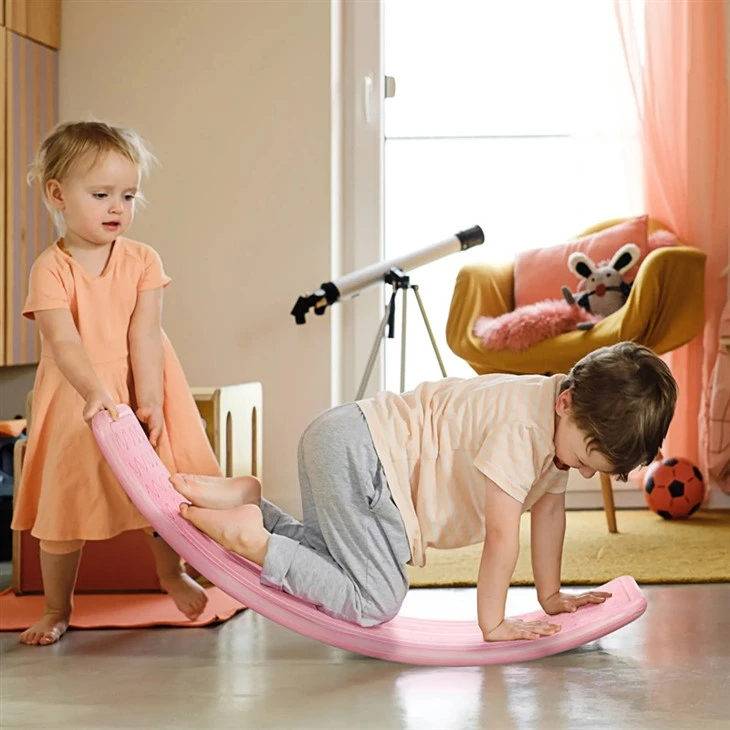
First off, let's talk about what a balance board is. A balance board is a simple yet effective tool that consists of a flat board on top of a rounded or curved base. When you stand on it, you have to constantly adjust your body position to stay balanced. There are different types of balance boards available on the market, like the Wobble Board for Toddlers, which is designed for the little ones to start developing their balance skills. Then there's the Balance Board for Kids, which is a bit more sturdy and suitable for older children. And for those who want a more versatile option, the Versatile Rocking Balance Boards can be used in multiple ways.
Now, how can a balance board be related to table tennis training? Well, table tennis is a fast - paced sport that requires quick movements, agility, and excellent balance. When you're playing table tennis, you're constantly moving around the table, making rapid lateral and forward - backward movements. Maintaining balance during these movements is crucial for accurate shot placement and quick reaction times.
One of the key benefits of using a balance board for table tennis training is improving proprioception. Proprioception is your body's ability to sense its position, movement, and equilibrium in space. By standing on a balance board, your body has to work hard to keep itself upright. This activates the proprioceptive receptors in your muscles, joints, and inner ear. When you transfer this improved proprioceptive awareness to the table tennis court, you'll be better able to control your body movements. For example, when you're making a sharp lateral movement to return a fast - paced shot, your body will have a better sense of where it is in space, allowing you to make more precise movements.
Balance boards also help in strengthening the muscles that are used in table tennis. The core muscles, including the abdominal and back muscles, play a vital role in stabilizing your body during table tennis movements. When you stand on a balance board, your core muscles are constantly engaged to keep you balanced. This is similar to when you're on the table tennis court, where your core helps you maintain your posture and generate power for your shots. Additionally, the muscles in your legs are also strengthened. Strong leg muscles are essential for quick movements around the table, especially when you need to make explosive forward or backward steps.
Another aspect is reaction time. Using a balance board requires you to react quickly to changes in the board's position. As the board wobbles or rocks, you have to make immediate adjustments to stay balanced. This trains your nervous system to respond rapidly to stimuli. In table tennis, a split - second delay in reaction time can mean the difference between winning and losing a point. By improving your reaction time on the balance board, you can transfer this skill to the table tennis game, allowing you to respond more quickly to your opponent's shots.
Let's look at some practical ways to incorporate a balance board into table tennis training. One simple exercise is to stand on the balance board and practice simple table tennis footwork movements. You can do side - to - side shuffles, forward and backward steps, or even some quick lateral jumps. This helps you combine balance training with the specific movements used in table tennis. Another exercise is to hold a table tennis racket while standing on the balance board and practice some basic shot - making motions. This helps you work on your balance while also focusing on the correct technique for hitting the ball.
It's important to note that while a balance board can be a great addition to table tennis training, it shouldn't replace traditional table tennis training. You still need to spend time on the table, practicing your shots, playing against opponents, and working on your overall game strategy. The balance board is a supplementary tool that can enhance your performance in specific areas.
However, there are some considerations when using a balance board for table tennis training. Safety is always a top priority. Make sure to use the balance board on a flat, stable surface, and start with slow and gentle movements if you're new to using it. It's also a good idea to have someone nearby to spot you, especially when you're trying more advanced exercises.
In terms of choosing the right balance board for table tennis training, you need to consider your skill level and the type of training you want to do. If you're a beginner, a more stable balance board might be a good choice. As you get more experienced, you can switch to a more challenging board that offers greater instability.
If you're a table tennis coach or a player looking to enhance your training, I highly recommend giving a balance board a try. It can provide a unique and effective way to improve your balance, proprioception, muscle strength, and reaction time. As a balance board supplier, I've seen firsthand how these tools can make a difference in various sports training, and table tennis is no exception.
If you're interested in purchasing balance boards for your table tennis training needs, I'd love to have a chat with you. Whether you're looking for a Wobble Board for Toddlers, a Balance Board for Kids, or a Versatile Rocking Balance Boards, I can help you find the right product for your requirements. Just reach out, and we can discuss the best options for you.

In conclusion, a balance board can definitely be used for table tennis training. It offers a range of benefits that can enhance your performance on the table tennis court. So, why not give it a go and see how it can take your table tennis game to the next level?
References
- "The Science of Table Tennis" - A general sports science book on the biomechanics and training aspects of table tennis.
- "Balance Training in Sports" - A research - based publication that discusses the use of balance - training tools in various sports.