

A balance board is a simple yet highly effective fitness tool that offers a wide range of benefits, from improving balance and coordination to strengthening various muscle groups throughout the body. As a balance board supplier, I'm often asked about the specific muscles that a balance board works. In this blog post, I'll delve into the science behind balance board workouts and explore the key muscle groups that are engaged during these exercises.
The Basics of Balance Board Training
Before we dive into the specific muscles, it's important to understand how a balance board works. When you stand on a balance board, your body is constantly adjusting to maintain stability. This requires the activation of multiple muscle groups, both large and small, to keep you upright and centered. The constant movement and instability challenge your body's proprioceptive system, which is responsible for your sense of balance and spatial awareness.
Lower Body Muscles
One of the primary areas of the body that a balance board targets is the lower body. The following muscles are particularly engaged during balance board workouts:
Quadriceps
The quadriceps are a group of four muscles located on the front of the thigh. They are responsible for extending the knee joint and are essential for movements such as walking, running, and jumping. When you stand on a balance board, your quadriceps work to keep your knees straight and stable. The constant adjustments required to maintain balance activate these muscles, helping to strengthen and tone them over time.
Hamstrings
The hamstrings are a group of three muscles located on the back of the thigh. They are responsible for flexing the knee joint and extending the hip joint. Similar to the quadriceps, the hamstrings are engaged when you stand on a balance board to help maintain stability. The instability of the board forces the hamstrings to work harder to control the movement of your legs, which can lead to increased strength and flexibility.
Glutes
The glutes, or gluteal muscles, are the largest muscles in the body and are located in the buttocks. They are responsible for hip extension, abduction, and external rotation. When you stand on a balance board, your glutes work to keep your hips stable and aligned. The constant movement and challenges to your balance activate these muscles, helping to strengthen and tone them. Strong glutes are not only important for balance and stability but also for overall lower body strength and function.
Calves
The calves are a group of two muscles located on the back of the lower leg. They are responsible for plantar flexion, which is the movement of pointing your toes downward. When you stand on a balance board, your calves work to keep your ankles stable and prevent your feet from rolling. The constant adjustments required to maintain balance activate these muscles, helping to strengthen and tone them. Strong calves are important for balance, stability, and proper gait.
Core Muscles
In addition to the lower body muscles, a balance board also engages the core muscles. The core is a group of muscles that includes the abdominal muscles, back muscles, and pelvic floor muscles. These muscles are responsible for stabilizing the spine and pelvis and are essential for maintaining proper posture and balance.
Abdominals
The abdominal muscles are a group of four muscles located on the front of the abdomen. They are responsible for flexing the spine and rotating the torso. When you stand on a balance board, your abdominal muscles work to keep your torso stable and prevent it from swaying. The constant adjustments required to maintain balance activate these muscles, helping to strengthen and tone them. Strong abdominal muscles are important for overall core strength, stability, and proper posture.
Back Muscles
The back muscles are a group of muscles located on the back of the body. They are responsible for extending the spine and maintaining proper posture. When you stand on a balance board, your back muscles work to keep your spine straight and stable. The instability of the board forces the back muscles to work harder to control the movement of your torso, which can lead to increased strength and flexibility.
Pelvic Floor Muscles
The pelvic floor muscles are a group of muscles located at the bottom of the pelvis. They are responsible for supporting the pelvic organs and maintaining continence. When you stand on a balance board, your pelvic floor muscles work to keep your pelvis stable and aligned. The constant adjustments required to maintain balance activate these muscles, helping to strengthen and tone them. Strong pelvic floor muscles are important for overall pelvic health and function.

Upper Body Muscles
While the lower body and core muscles are the primary focus of balance board workouts, the upper body muscles are also engaged to some extent. The following muscles are particularly involved in maintaining balance and stability on a balance board:
Shoulders
The shoulders are a group of muscles located at the top of the arms. They are responsible for shoulder abduction, adduction, and rotation. When you stand on a balance board, your shoulders work to keep your arms stable and help you maintain your balance. The constant adjustments required to stay upright activate these muscles, helping to strengthen and tone them.
Arms
The arms are a group of muscles located between the shoulders and the wrists. They are responsible for various movements such as lifting, pushing, and pulling. When you stand on a balance board, your arms work to help you maintain your balance by providing additional support and stability. The constant adjustments required to stay upright activate these muscles, helping to strengthen and tone them.
Benefits of Working These Muscles
Working the muscles targeted by a balance board offers a wide range of benefits, including:
Improved Balance and Coordination
One of the primary benefits of using a balance board is improved balance and coordination. By challenging your body's proprioceptive system, balance board workouts help to enhance your sense of balance and spatial awareness. This can lead to better stability and control in your daily activities, as well as a reduced risk of falls and injuries.
Increased Strength and Flexibility
Balance board workouts engage multiple muscle groups simultaneously, which can lead to increased strength and flexibility. The constant adjustments required to maintain balance activate these muscles, helping to build and tone them over time. Stronger and more flexible muscles can improve your overall physical performance and reduce your risk of injury.
Enhanced Core Stability
The core muscles are essential for maintaining proper posture and balance. By engaging the core muscles during balance board workouts, you can strengthen and stabilize this important muscle group. A strong core can improve your overall body alignment, reduce your risk of back pain, and enhance your performance in other physical activities.
Improved Joint Health
Balance board workouts can also help to improve joint health. The constant movement and challenges to your balance activate the muscles around your joints, which can help to support and protect them. This can reduce your risk of joint pain and injury and improve your overall joint mobility.
Our Balance Board Products
At our company, we offer a variety of balance boards to suit different needs and fitness levels. Here are some of our popular products:
- Curvy Rocker Board: This unique balance board features a curved design that provides a dynamic and challenging workout. It is suitable for both beginners and advanced users and can be used for a variety of exercises.
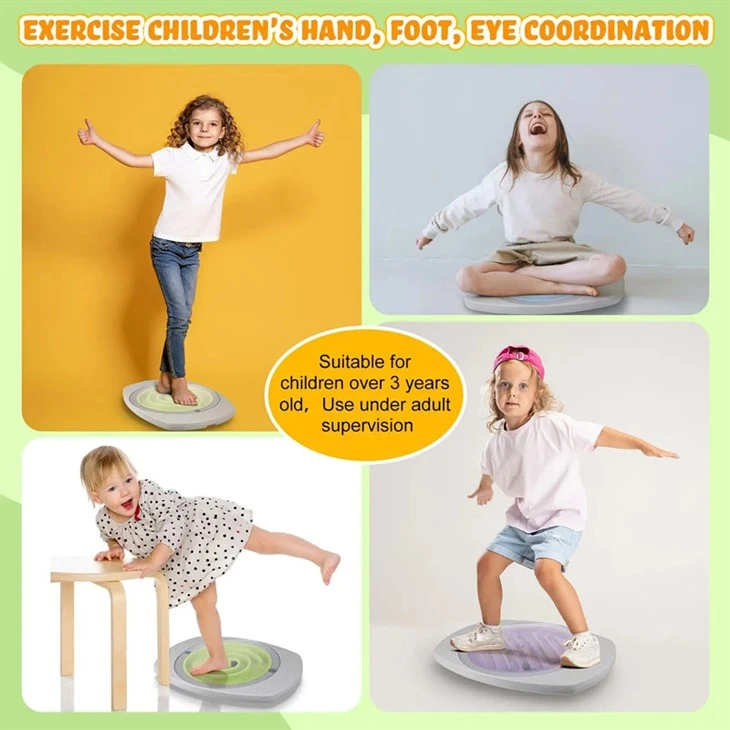
- Wobble Board for Kids: Designed specifically for children, this wobble board is a fun and engaging way to improve balance and coordination. It is made from high-quality materials and is safe and durable for kids to use.
- Versatile Rocking Balance Boards: These versatile balance boards can be used in a variety of ways to provide a challenging and effective workout. They are suitable for all fitness levels and can be used at home, in the gym, or outdoors.
Contact Us for Procurement
If you're interested in purchasing our balance boards for your personal use, fitness studio, or business, we'd love to hear from you. Our team of experts can help you choose the right balance board for your needs and provide you with all the information you need to make an informed decision. Please feel free to contact us to discuss your procurement requirements and start your journey towards better balance and fitness.
References
- American Council on Exercise. (n.d.). Balance Training. Retrieved from https://www.acefitness.org/resources/pros/expert-articles/6366/balance-training/
- Mayo Clinic. (2020). Balance exercises: Improve stability and prevent falls. Retrieved from https://www.mayoclinic.org/healthy-lifestyle/fitness/in-depth/balance-exercises/art-20046300
- National Strength and Conditioning Association. (n.d.). Balance Training. Retrieved from https://www.nsca.com/education/articles/topic/performance-training/balance-training/