

Hey there! As a supplier of jumping boards, I often get asked about the maximum twisting force these boards can endure. It's a crucial question, especially when you're looking to provide a safe and durable product for users. In this blog, I'll break down everything you need to know about the maximum twisting force of jumping boards.
First off, let's understand why the twisting force matters. When someone jumps on a jumping board, they don't always land perfectly centered. There are often sideways movements, twists, and turns. These actions generate twisting forces on the board. If the board can't handle these forces, it might break or become unstable, which is a big safety risk.
The maximum twisting force a jumping board can endure depends on several factors. One of the main factors is the material used to make the board. We use high - quality materials in our jumping boards, which play a significant role in determining their strength. For example, boards made from reinforced plastics or strong wood composites are generally more resistant to twisting forces compared to those made from cheaper, flimsier materials.
Reinforced plastics are a popular choice for our jumping boards. They're lightweight, which makes the boards easy to move around, yet they have excellent strength properties. The plastic is often reinforced with fibers like fiberglass, which adds extra toughness. This reinforcement allows the board to withstand a fair amount of twisting without cracking or breaking.
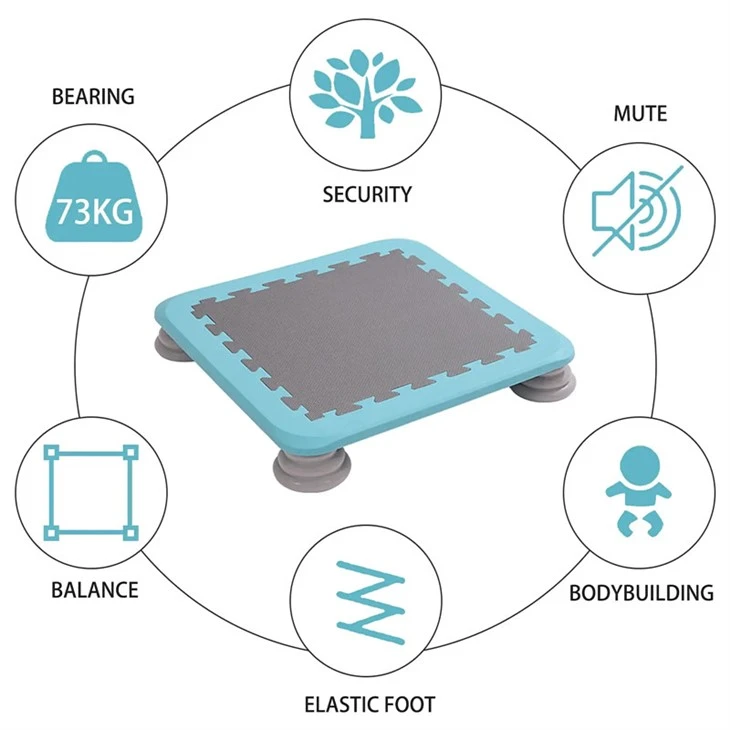

Wood composites are another great option. They're made by combining wood fibers with adhesives and other materials. The result is a material that has the natural look and feel of wood but with enhanced strength. Wood composite jumping boards can handle a substantial amount of twisting force, especially if they're properly treated and constructed.
Another factor that affects the maximum twisting force is the design of the jumping board. Our boards are designed with stability in mind. We use a wide base and a well - balanced shape to distribute the forces evenly across the board. This way, when a user jumps and creates a twisting motion, the force is spread out, reducing the stress on any single point of the board.
The thickness of the board also plays a role. Thicker boards generally have a higher resistance to twisting forces. However, we need to strike a balance between thickness and weight. A board that's too thick might be too heavy to use, especially for kids. So, we carefully select the thickness based on the intended use of the board.
Now, let's talk about the testing we do to determine the maximum twisting force. We use a variety of testing methods to ensure our jumping boards meet the highest safety standards. One common method is the static twist test. In this test, we fix the board at one end and apply a controlled twisting force at the other end. We gradually increase the force until the board starts to show signs of damage. This gives us an idea of the maximum twisting force the board can endure under static conditions.
We also conduct dynamic tests, where we simulate real - life jumping and twisting scenarios. We use test dummies or volunteers to jump on the board in different ways, creating various twisting forces. By monitoring the board during these tests, we can see how it performs under actual use conditions.
Based on our testing, our jumping boards can endure a significant amount of twisting force. For our Jumping Hopping Toys, which are designed for general use, they can handle a moderate level of twisting. These boards are great for kids to have fun and get some exercise. The materials and design ensure that they can withstand the normal twists and turns that occur during play.
Our Indoor Small Trampoline for Kids also has a good resistance to twisting. The small size makes it perfect for indoor use, and the structure is built to handle the movements of young children. Even if they land a bit off - center and create a twisting force, the board remains stable and safe.
The Toddler Bouncing Board is specifically designed for toddlers. We understand that toddlers might not have the best balance, so we've made sure the board can handle the small - scale twisting forces they generate. The soft materials and gentle bounce make it a safe and enjoyable option for the little ones.
When it comes to choosing a jumping board, it's important to consider the maximum twisting force. You don't want a board that will break or become unstable after a few jumps. Our jumping boards are designed and tested to provide a safe and durable experience for users of all ages.
If you're in the market for a high - quality jumping board, we're here to help. We offer a wide range of products to suit different needs and budgets. Whether you're looking for a small indoor board for your kids or a larger board for more active play, we've got you covered.
If you have any questions about our jumping boards or want to discuss a potential purchase, feel free to reach out. We're always happy to have a chat and help you find the perfect board for your needs.
In conclusion, the maximum twisting force a jumping board can endure is determined by factors like the material, design, and thickness. Through rigorous testing, we ensure that our jumping boards can handle the twisting forces generated during normal use. So, if you're looking for a reliable and safe jumping board, look no further. Contact us today to start the purchasing process and get your hands on a top - quality jumping board.
References
- Engineering textbooks on material strength and testing
- Industry standards for children's toys safety
- Internal research and development reports from our company