

When it comes to plastic toy shelves, one of the most crucial factors to consider is their heat - resistance. As a supplier of plastic toy shelves, I understand the significance of this characteristic and its impact on the safety and durability of the products. In this blog, I will delve into the concept of heat - resistance in plastic toy shelves, exploring what it means, why it matters, and how we ensure our products meet the required standards.
Understanding Heat - Resistance in Plastic Toy Shelves
Heat - resistance refers to a material's ability to withstand high temperatures without significant deformation, melting, or releasing harmful substances. For plastic toy shelves, this property is essential because they may be exposed to various heat sources in different environments. For example, in a sunny room, the shelves can be heated by sunlight passing through the windows. Or, if placed near a heater or other heat - generating appliances, they need to maintain their structural integrity.
Plastic materials used in toy shelves are typically polymers. Different polymers have different heat - resistance levels. Some common plastics used in the manufacturing of toy shelves include polypropylene (PP), polyethylene (PE), and acrylonitrile butadiene styrene (ABS). Each of these plastics has its own unique heat - resistance properties.
Polypropylene is known for its relatively good heat - resistance. It can withstand temperatures up to around 100 - 120°C (212 - 248°F) before starting to soften. This makes it a suitable choice for toy shelves as it can handle normal household temperatures and mild heat exposure without losing its shape. Polyethylene, on the other hand, has a lower heat - resistance. Low - density polyethylene (LDPE) starts to soften at around 80 - 100°C (176 - 212°F), while high - density polyethylene (HDPE) can withstand slightly higher temperatures, up to about 120°C (248°F).
Acrylonitrile butadiene styrene (ABS) is another popular plastic for toy shelves. It has a good balance of strength, toughness, and heat - resistance. ABS can typically withstand temperatures up to around 80 - 90°C (176 - 194°F) without significant deformation. However, its heat - resistance can be improved through various additives and processing techniques.
Why Heat - Resistance Matters
The heat - resistance of plastic toy shelves is not just a technical specification; it has real - world implications for the safety and functionality of the product.
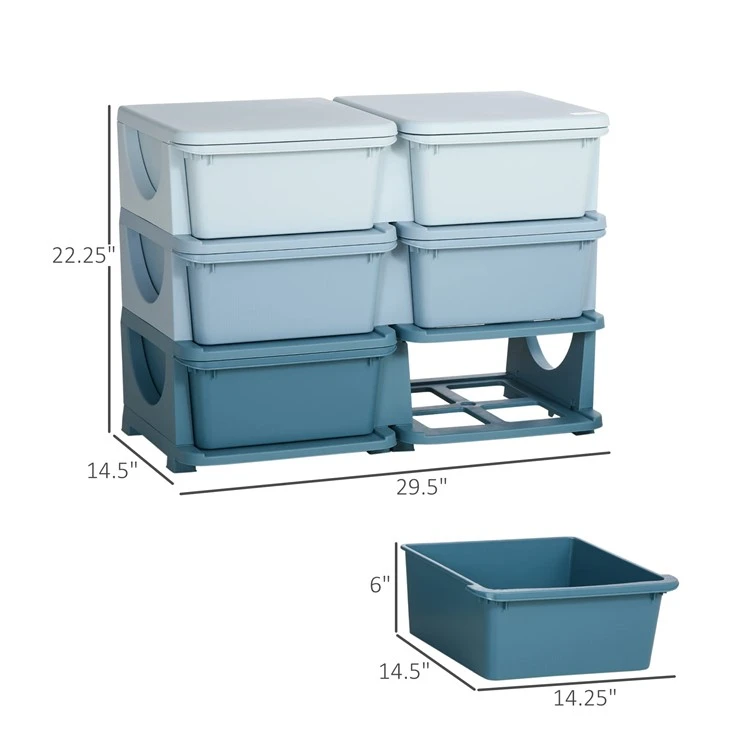
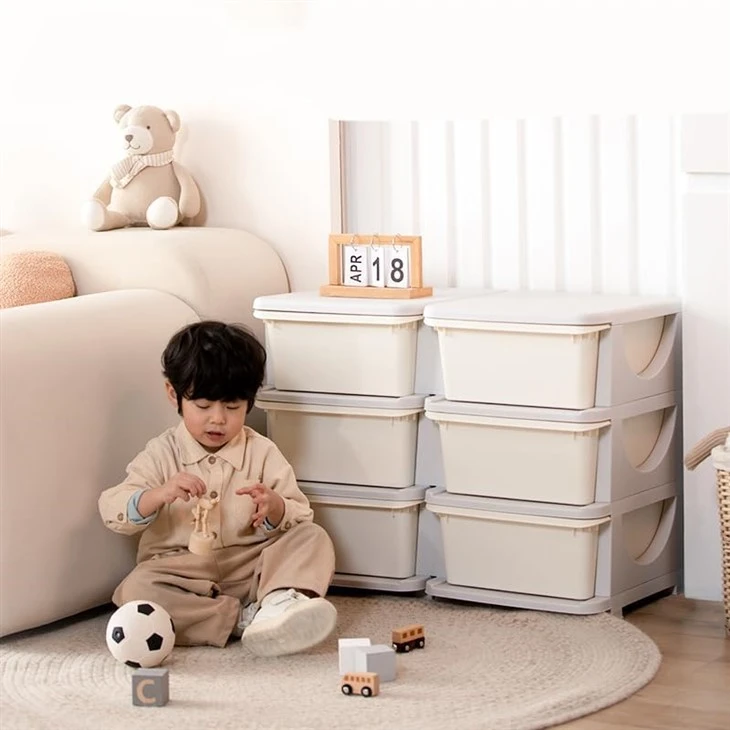
Safety
First and foremost, safety is a top priority. If a plastic toy shelf has poor heat - resistance, it can melt or deform when exposed to high temperatures. This not only ruins the shelf but also poses a potential hazard. For example, a melted shelf can create sharp edges or release harmful chemicals. In a household with children, this can be extremely dangerous as children may come into contact with the damaged shelf or inhale the fumes from the melted plastic.
Durability
Heat - resistance also affects the durability of the toy shelf. When a shelf is exposed to heat, if it cannot withstand the temperature, it may warp or crack over time. This reduces the shelf's load - bearing capacity and its overall lifespan. A heat - resistant shelf, on the other hand, can maintain its shape and strength even under normal heat exposure, ensuring that it can be used for a long time to store children's toys.
Aesthetics
In addition to safety and durability, heat - resistance also impacts the aesthetics of the toy shelf. A shelf that deforms due to heat will look unappealing and may not fit well in the room's decor. By using heat - resistant plastics, we can ensure that our toy shelves maintain their original appearance, providing a clean and organized storage solution for children's toys.
Ensuring High Heat - Resistance in Our Plastic Toy Shelves
As a supplier of plastic toy shelves, we take several steps to ensure that our products have high heat - resistance.
Material Selection
We carefully select the plastics used in our toy shelves. We choose polymers with good heat - resistance properties, such as high - quality polypropylene and ABS. We also work closely with our material suppliers to ensure that the plastics meet our strict quality standards.
Additives
In some cases, we use additives to improve the heat - resistance of the plastics. For example, heat stabilizers can be added to the plastic during the manufacturing process. These stabilizers help to prevent the plastic from degrading at high temperatures, thereby increasing its heat - resistance.
Quality Control
We have a rigorous quality control process in place. Each batch of toy shelves is tested for heat - resistance before it leaves our factory. We use specialized equipment to simulate different heat conditions and check for any signs of deformation or melting. Only the shelves that pass our heat - resistance tests are allowed to be sold to our customers.
Applications and Complementary Products
Our plastic toy shelves are suitable for a variety of applications. They can be used in children's bedrooms, playrooms, nurseries, and even in daycare centers. They provide a convenient and organized way to store children's toys, books, and other small items.
If you are looking for more storage solutions for your children, we also offer a range of complementary products. For example, our Kids Storage Cabinet is a great addition to the toy shelves. It provides additional storage space and can be used to store larger items or items that need to be kept out of sight.
Our Children Toys Storage Cabinets come in different sizes and designs to meet your specific needs. They are made of high - quality plastics and have good heat - resistance, just like our toy shelves. And if you prefer a storage cabinet with drawers, our Kids Storage Cabinet with Drawers is a perfect choice. It offers easy access to the stored items and helps to keep the toys organized.
Contact Us for Procurement
If you are interested in our plastic toy shelves or any of our other storage products, we would be more than happy to discuss your procurement needs. We offer competitive prices, high - quality products, and excellent customer service. Whether you are a retailer looking to stock our products or an individual looking for a reliable storage solution for your children's toys, we can provide you with the right products at the right price.
Please feel free to reach out to us to start the procurement discussion. We look forward to working with you and helping you create a safe and organized environment for children's toys.
References
- "Plastics Technology Handbook", Third Edition, by James F. Carley. This book provides in - depth information on the properties and processing of different plastics, including their heat - resistance characteristics.
- "Handbook of Polymer Science and Technology", edited by Joel R. Fried. It offers comprehensive knowledge about polymers, including factors affecting their heat - resistance and how to improve it.