

Hey there! As a supplier of plastic toy shelves, I've had my fair share of chats with parents, toy store owners, and daycare providers about the best way to store those countless toys. One question that pops up all the time is, "What's the difference between a plastic and a wooden toy shelf?" Well, let's dive right in and break it down.
1. Durability
First off, let's talk durability. Wood is a classic material, and when it's well - made, it can last for generations. High - quality wooden toy shelves can withstand a lot of wear and tear. They're solid, and if they get a little banged up, you can sand and refinish them to make them look brand new. However, not all wooden shelves are created equal. Cheaper wood options might start to show signs of damage like splintering or cracking after a while, especially if they're in a high - traffic area where kids are constantly grabbing toys.
On the other hand, plastic toy shelves are super durable in their own way. They're resistant to moisture, which means you don't have to worry about them warping if there's a little spill. They can also handle a fair amount of rough handling. Kids can push, pull, and climb on them (though we don't encourage that, of course), and they'll still hold up. Plastic doesn't splinter, so there's less of a risk of injury. Plus, if a part breaks, it's often easier and cheaper to replace compared to a wooden shelf.
2. Appearance
Appearance is a big factor when choosing a toy shelf. Wooden shelves have a natural, warm look that can add a touch of elegance to any room. They come in a variety of finishes, from light - colored woods like pine to dark, rich mahogany. The grain patterns in the wood give each shelf a unique character. If you're going for a traditional or rustic look in your child's room or a play area, a wooden toy shelf might be the way to go.
Plastic toy shelves, on the other hand, come in a wide range of colors and styles. You can find bright, fun colors that will appeal to kids, like hot pink, lime green, or sunny yellow. They can also have modern, sleek designs that fit well in a contemporary - styled room. Some plastic shelves even mimic the look of wood, so you can get the best of both worlds if you want the durability of plastic with the appearance of wood.
3. Cost
Cost is always a consideration. Generally speaking, wooden toy shelves tend to be more expensive, especially if you're looking for high - quality, solid wood. The cost of the wood itself, along with the labor involved in crafting and finishing the shelf, adds up. However, if you're willing to invest in a well - made wooden shelf, it can be a long - term purchase that lasts for many years.
Plastic toy shelves are usually more budget - friendly. The materials are less expensive, and the manufacturing process is often more streamlined. This means you can get a decent - quality plastic shelf for a fraction of the cost of a wooden one. If you're on a tight budget or if you're not sure how long you'll need the shelf, a plastic option might be the better choice.
4. Maintenance
Maintenance is another important aspect. Wooden shelves need a bit more TLC. You have to keep them clean and dry to prevent warping and mold growth. They may also need to be polished or oiled periodically to keep the wood looking its best. If there are scratches or dents, you'll need to take the time to repair them properly.
Plastic toy shelves are a breeze to maintain. You can simply wipe them down with a damp cloth and some mild soap. There's no need for special cleaners or treatments. And as I mentioned earlier, if a part breaks, it's usually easy to replace.

5. Weight and Portability
When it comes to weight and portability, plastic toy shelves have the upper hand. They're much lighter than wooden shelves, which makes them easier to move around. If you need to rearrange the playroom or take the shelf to a different location, you can do it without much hassle.
Wooden shelves, especially those made of solid wood, can be quite heavy. Moving them around can be a two - or three - person job, and you have to be careful not to damage the floor or the shelf itself during the process.
6. Safety
Safety is a top priority, especially when it comes to kids' toys and storage. Wooden shelves can pose a risk of splintering, which can cause cuts and infections. They also need to be properly secured to the wall to prevent tipping, especially if they're tall.
Plastic shelves are generally considered safer in terms of splintering. However, you still need to make sure they're stable and won't tip over. Look for shelves with a wide base and proper weight distribution.
7. Storage Options
Both plastic and wooden toy shelves come in a variety of storage options. You can find shelves with different numbers of compartments, drawers, and bins.
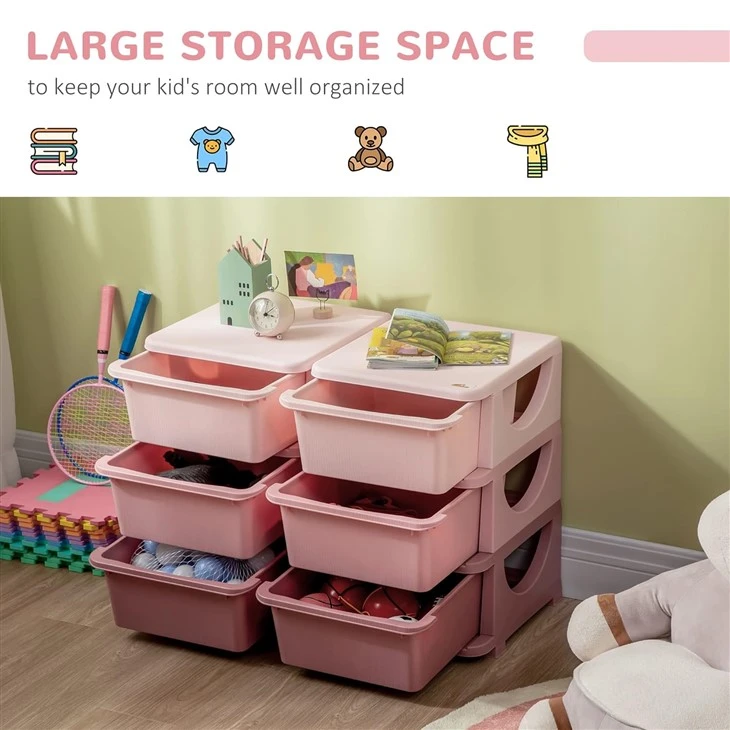
For plastic toy shelves, there are some really innovative designs. For example, you can check out our Plastic Storage Cabinets for Kids, which offer great storage solutions. They often have modular components, so you can customize the storage to fit your needs. You can add or remove bins and drawers as your child's toy collection changes.
Wooden shelves also have a lot of storage options. You might like the Kids Storage Cabinet with Drawers for a more traditional look. They can have deep drawers for storing larger toys and open compartments for easy access to smaller ones.
In conclusion, both plastic and wooden toy shelves have their pros and cons. It really depends on your personal preferences, budget, and the specific needs of your child's play area. If you're looking for a durable, low - maintenance, and budget - friendly option, a plastic toy shelf might be the right choice for you.
If you're interested in purchasing a plastic toy shelf or have any questions about our products, feel free to reach out. We're here to help you find the perfect storage solution for your little ones' toys. Whether you need a simple shelf or a more elaborate Kids Storage Cabinet, we've got you covered. Let's have a chat and see how we can make your toy storage dreams a reality!
References
- "The Ultimate Guide to Toy Storage" by Toy Storage Experts
- "Wood vs. Plastic: A Comparison of Furniture Materials" by Furniture Magazine