

Teaching toddlers about numbers and letters is a crucial part of their early development, and the playground can be an excellent classroom. As a provider of Toddler Playgrounds, I've witnessed firsthand how the right environment and activities can transform learning into a fun and engaging experience for young children. In this blog, I'll share some of the best ways to teach toddlers about numbers and letters at the playground.
Incorporating Numbers and Letters into Play Structures
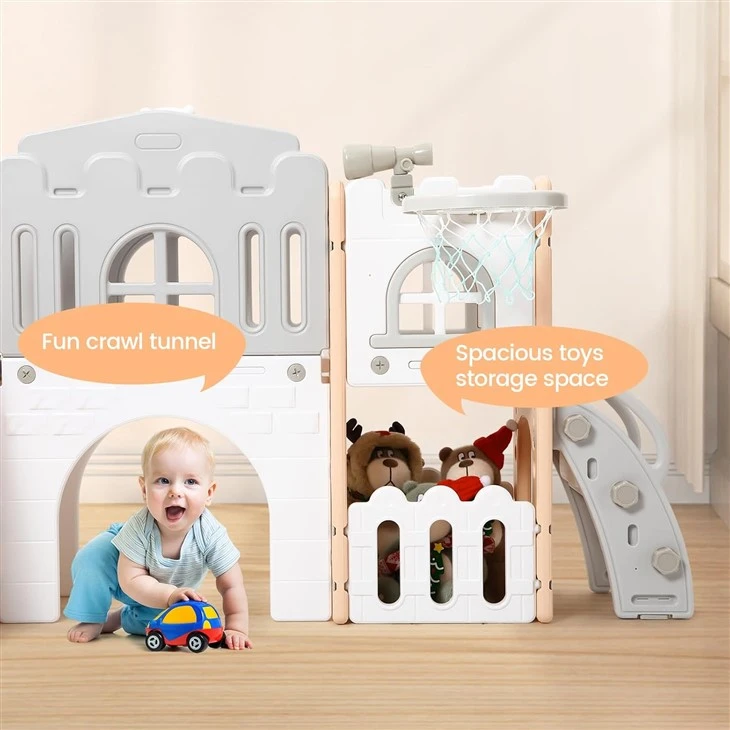
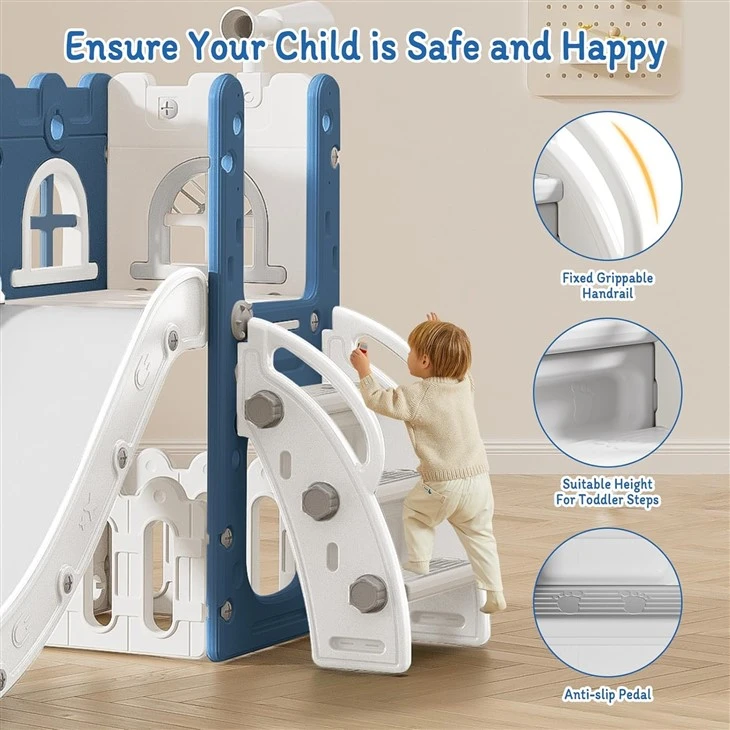
One of the most effective ways to teach toddlers about numbers and letters is by integrating them directly into the playground equipment. For example, our Kids Slide Playset can be customized with numbered steps or letter-shaped platforms. As toddlers climb up the slide, they can count the steps aloud, reinforcing their understanding of numbers. Similarly, the letter-shaped platforms can be used to introduce the alphabet in a tactile and visual way.
Another great option is our Swing Set with Slide for Kids. You can attach small signs with numbers or letters to the swings. As toddlers swing back and forth, they can read the signs and try to say the corresponding numbers or letters. This not only adds an educational element to the play but also makes it more interactive and engaging.
Our Indoor Outdoor Baby Slide is also a versatile tool for teaching. You can draw numbers or letters on the slide surface using washable markers. Toddlers can then trace the shapes with their hands as they slide down, helping them to develop fine motor skills while learning about numbers and letters.
Number and Letter Scavenger Hunts
Scavenger hunts are a fun and exciting way to get toddlers actively involved in learning. Hide small cards with numbers or letters around the playground. Give each toddler a list of the numbers or letters they need to find. As they search for the cards, they'll have to recognize the symbols and match them to the ones on their list. This activity not only reinforces their knowledge of numbers and letters but also improves their observation and problem-solving skills.
To make the scavenger hunt more challenging, you can group the numbers or letters in different areas of the playground based on certain criteria, such as all the odd numbers in one area and all the even numbers in another. Toddlers will then have to think critically about where to look for each symbol.
Singing and Rhyming
Singing and rhyming are powerful tools for teaching toddlers. There are many popular nursery rhymes and songs that incorporate numbers and letters, such as "One, Two, Buckle My Shoe" and the "Alphabet Song." Play these songs at the playground and encourage toddlers to sing along. The repetitive nature of the songs helps toddlers to remember the numbers and letters more easily.
You can also create your own rhymes and songs using the playground equipment as inspiration. For example, you could sing a song about the different parts of the Kids Slide Playset, using numbers to describe how many steps there are or letters to name the different shapes.
Storytelling
Storytelling is another effective way to teach toddlers about numbers and letters. Create stories that feature numbers and letters as characters or elements. For example, you could tell a story about a little boy who goes on an adventure with the letter "A" and has to count the number of apples he finds along the way.
While telling the story at the playground, you can use the playground equipment to act out parts of the story. For instance, if the story mentions climbing a hill, you can have the toddlers climb up the slide or a small hill on the playground. This makes the story more engaging and helps toddlers to better understand the concepts of numbers and letters.
Group Games
Group games are a great way to teach toddlers social skills while also reinforcing their knowledge of numbers and letters. For example, you can play a game where toddlers stand in a circle and take turns saying a number or a letter. If a toddler repeats a number or letter that has already been said, they have to sit out for a round.
Another group game is "Simon Says" with a number and letter twist. Instead of just physical actions, Simon can say things like "Simon says find the number 3" or "Simon says spell the word 'cat' using the letter cards." This game not only keeps toddlers engaged but also helps them to quickly recognize and respond to numbers and letters.
Using Natural Elements
The playground is full of natural elements that can be used to teach numbers and letters. For example, you can count the number of trees, flowers, or birds in the playground. You can also use leaves or rocks to create the shapes of numbers and letters. Toddlers can then arrange the natural elements to form different numbers and letters, which helps them to understand the concept of shape and form.
Collecting natural items like leaves or acorns can also be turned into a counting activity. Have the toddlers collect a certain number of items and then count them together. This hands-on approach to learning makes it more memorable for toddlers.
Encouraging Creativity
Finally, encourage toddlers to be creative with numbers and letters. Provide them with chalk or markers and let them draw numbers and letters on the playground surface. They can also create their own stories or songs using the numbers and letters they've learned.
Creativity helps toddlers to think outside the box and develop a deeper understanding of numbers and letters. It also gives them a sense of ownership over their learning, which can be very motivating.
In conclusion, the playground is a wonderful place to teach toddlers about numbers and letters. By incorporating these fun and engaging activities into the playtime, you can make learning a natural and enjoyable part of their early development. If you're interested in creating a Toddler Playground that combines education and fun, we'd love to discuss your needs and provide you with the best solutions. Contact us to start the conversation about your playground project.
References
- Piaget, J. (1952). The Origins of Intelligence in Children. International Universities Press.
- Vygotsky, L. S. (1978). Mind in Society: The Development of Higher Psychological Processes. Harvard University Press.
- Ginsburg, H. P. (2006). Mathematics Learning in Early Childhood: Paths Toward Excellence and Equity. National Academies Press.