

Hey there! As a supplier of kindergarten tables, I've seen firsthand how crucial it is to get the right size of tables for a kindergarten room. It's not just about making the room look nice; it's about ensuring the comfort, safety, and productivity of the little ones. In this blog, I'll share some tips on how to measure the right size of a kindergarten table for a room.
Understanding the Space
First things first, you need to understand the available space in the kindergarten room. Measure the length and width of the room accurately. Don't forget to account for other furniture, such as bookshelves, cabinets, and play areas. You want to leave enough space for the kids to move around freely without bumping into things.
Let's say you have a room that's 15 feet long and 12 feet wide. That's a total area of 180 square feet. But you can't use all of that space for tables. You need to consider the traffic flow and the space needed for other activities. A good rule of thumb is to leave at least 3 feet of clearance around the tables for easy movement.
Considering the Age Group
The age of the children using the tables is another important factor. Younger kids need smaller tables and chairs that are proportionate to their size. As they grow older, they'll need larger furniture to accommodate their changing bodies.
For toddlers, tables with a height of around 12 to 14 inches are ideal. These tables are low enough for them to reach comfortably and encourage independent play. As the kids reach preschool age, tables with a height of 16 to 18 inches are more suitable. And for kindergarteners, tables with a height of 18 to 20 inches are a good fit.
You can find a variety of tables suitable for different age groups on our website. Check out our Children Plastic Table and Chairs and Preschool Tables and Chairs for Kids collections.
Determining the Table Shape
The shape of the table also plays a role in how well it fits into the room. Rectangular tables are a popular choice as they can accommodate more children and are easy to arrange in rows or clusters. Round tables, on the other hand, promote interaction and are great for group activities. Square tables are a versatile option that can be used in different configurations.
When choosing the table shape, consider the number of children who will be using the table at the same time. A rectangular table that's 6 feet long can comfortably seat 6 to 8 children. A round table with a diameter of 4 feet can seat 4 to 6 children.
Factoring in the Table Function
Think about how the tables will be used in the kindergarten room. Will they be used for meals, arts and crafts, or educational activities? Different activities may require different table sizes and features.
For meal times, you'll need tables that are large enough to hold plates, cups, and utensils. Tables with smooth surfaces are also easier to clean. If the tables will be used for arts and crafts, you may want to consider tables with built-in storage for supplies.
Our Study Table Chair for Kids collection offers tables with various features to meet different needs. These tables are designed to provide a comfortable and functional workspace for children.
Calculating the Number of Tables
Once you've determined the size and shape of the tables, you need to calculate how many tables you'll need for the room. Divide the available space by the area occupied by each table. Remember to leave enough space between the tables for easy movement.
For example, if you have a room with an area of 180 square feet and each table occupies an area of 20 square feet, you can fit 9 tables in the room. However, you may need to adjust this number based on the traffic flow and the space needed for other activities.
Testing the Layout
Before making a final decision, it's a good idea to test the layout of the tables in the room. Use masking tape to mark the outline of the tables on the floor and arrange them in different configurations. This will give you a better idea of how the tables will fit into the space and how the kids will move around them.

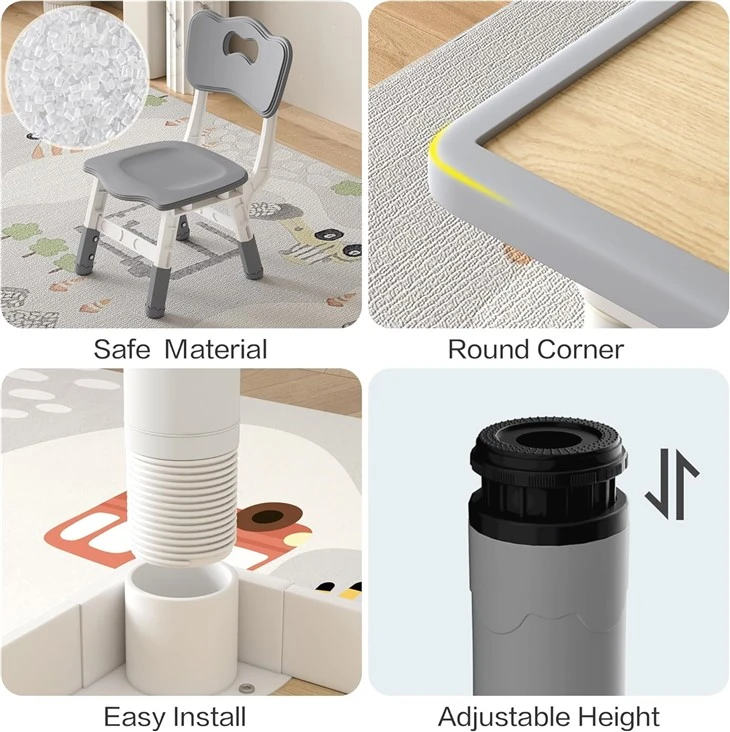
You can also try sitting at the tables yourself to get a sense of the comfort level. Make sure there's enough legroom and that the tables are at the right height.
Conclusion
Measuring the right size of a kindergarten table for a room is a combination of understanding the space, considering the age group, determining the table shape, factoring in the table function, calculating the number of tables, and testing the layout. By following these tips, you can ensure that the tables you choose are a perfect fit for the kindergarten room and provide a comfortable and functional environment for the children.
If you're interested in purchasing kindergarten tables for your facility, we'd love to hear from you. We offer a wide range of high-quality tables and chairs at competitive prices. Contact us today to discuss your needs and get a quote.
References
- "Early Childhood Education: A Comprehensive Introduction" by George S. Morrison
- "Designing Spaces for Young Children" by Carol Renwick Collard