

Measuring the area for stepping stones is a crucial step when planning a project, whether it's for a small garden path or a large outdoor patio. As a stepping stones supplier, I've encountered various customers with different needs and levels of expertise in this area. In this blog post, I'll share some practical tips on how to accurately measure the area for stepping stones, ensuring you get the right amount of materials for your project.
Understanding the Basics of Area Measurement
Before we dive into the measurement process, it's important to understand the concept of area. Area is the amount of space inside a two - dimensional shape. The most common unit of measurement for area is square feet (ft²) or square meters (m²). For stepping stone projects, we usually deal with simple geometric shapes such as rectangles, squares, circles, and triangles.
Measuring Rectangles and Squares
Rectangles and squares are the easiest shapes to measure. To find the area of a rectangle, you simply multiply the length by the width. The formula is (A = l\times w), where (A) is the area, (l) is the length, and (w) is the width. For a square, since all sides are equal, if the side length is (s), the area formula is (A=s\times s = s^{2}).
For example, if you want to create a rectangular path with a length of 10 feet and a width of 3 feet, the area of the path is (A = 10\times3=30) square feet.
Measuring Circles
The area of a circle is calculated using the formula (A=\pi r^{2}), where (A) is the area, (\pi) is a mathematical constant approximately equal to 3.14, and (r) is the radius of the circle. The radius is the distance from the center of the circle to its edge.
Suppose you plan to have a circular patio with a radius of 5 feet. The area of the patio is (A = 3.14\times5^{2}=3.14\times25 = 78.5) square feet.
Measuring Triangles
The area of a triangle is given by the formula (A=\frac{1}{2}\times b\times h), where (b) is the base of the triangle and (h) is the height. The base is the length of one side of the triangle, and the height is the perpendicular distance from the base to the opposite vertex.
If you have a triangular section in your stepping stone project with a base of 6 feet and a height of 4 feet, the area is (A=\frac{1}{2}\times6\times4 = 12) square feet.
Measuring Irregular Shapes
In real - world scenarios, the area where you want to place stepping stones may not be a perfect geometric shape. In such cases, you can break the irregular shape into smaller, more manageable geometric shapes.
For example, if you have an L - shaped area, you can divide it into two rectangles. Measure the length and width of each rectangle separately, calculate their areas using the rectangle formula, and then add the two areas together.
Another method is to use a grid. You can overlay a grid of squares (e.g., 1 - foot by 1 - foot squares) on the area. Count the number of full squares within the area. For partial squares, estimate how much of each square is covered. Then sum up the areas of all the squares to get an approximate area.
Considering the Spacing between Stepping Stones
When measuring the area for stepping stones, you also need to consider the spacing between the stones. The spacing can vary depending on the design and the purpose of the stepping stones. For a more stable and continuous walkway, you may want a smaller spacing, while for a more decorative and natural - looking path, a larger spacing can be used.
Let's say you plan to use stepping stones that are 1 square foot each, and you want a 2 - inch spacing between the stones. First, convert the spacing to feet (since 1 foot = 12 inches, 2 inches=(\frac{2}{12}=\frac{1}{6}) feet). When calculating the area, you need to account for both the area of the stones and the area of the spaces between them.
Measuring for Different Types of Stepping Stone Projects
Garden Paths
For a garden path, start by marking the boundaries of the path using stakes and string. Then measure the length and width of the path as described above. If the path has curves, you can use a flexible measuring tape to follow the curve and measure the length. Break the path into smaller straight sections if necessary and calculate the area of each section separately.
Patios
When measuring for a patio, measure the outer dimensions of the patio area. If there are any cut - outs (such as for a fire pit), measure the area of the cut - out and subtract it from the total area of the patio.
Using Our Stepping Stone Products
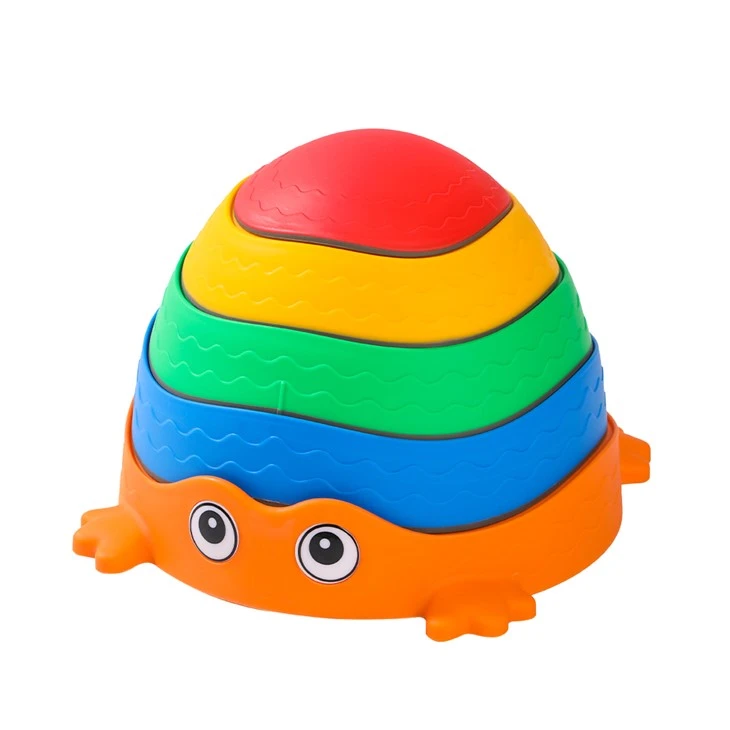
We offer a wide range of stepping stones suitable for various projects. Our Balance Stepping Stones for Kids are perfect for creating a fun and safe play area for children. These stones are designed to help kids develop balance and coordination skills.
Our Non - Slip Balance Stones are ideal for outdoor areas where safety is a concern. They have a special non - slip surface that reduces the risk of slips and falls, even when wet.
If you're looking for stepping stones for toddlers, our 5pcs Non - Slip Toddler Stepping Stones are a great choice. They are small and lightweight, making them easy for little ones to handle.
Calculating the Number of Stepping Stones Needed
Once you have measured the area and decided on the spacing, you can calculate the number of stepping stones needed. First, determine the area of a single stepping stone. Then divide the total area (including the spacing) by the area of a single stone.
For example, if the total area of your project is 50 square feet and each stepping stone has an area of 1 square foot, you may need approximately 50 stones. However, it's always a good idea to add a few extra stones (about 5 - 10%) to account for any breakage or mistakes during installation.
Contact Us for Your Stepping Stone Needs
If you're planning a stepping stone project and need more information or assistance with measurement, we're here to help. Our team of experts can provide you with detailed advice on choosing the right stepping stones for your project and ensure you get the correct quantity. Whether you're a DIY enthusiast or a professional contractor, we have the products and knowledge to meet your needs. Contact us today to start your stepping stone project!

References
- "Geometry: A Comprehensive Course" by Dan Pedoe
- "Landscape Design Basics" by John Brookes