

Hey there! I'm a supplier of sensory chairs, and I'm super stoked to chat with you about how these amazing pieces of equipment can boost body awareness. You know, body awareness is all about understanding where our body parts are in space and how they move. It's a fundamental skill that helps us navigate our daily lives with ease. And guess what? Sensory chairs can play a huge role in enhancing this crucial ability.
Let's start by understanding the basics of body awareness. Our body has a built - in system called the proprioceptive system. This system gives us information about the position, movement, and force of our body parts. It's like an internal GPS that tells us if we're standing up straight, bending down, or reaching for something. When this system is well - tuned, we can move smoothly and perform tasks efficiently. But for some people, especially kids with sensory processing issues like autism, the proprioceptive system might not work as well as it should.
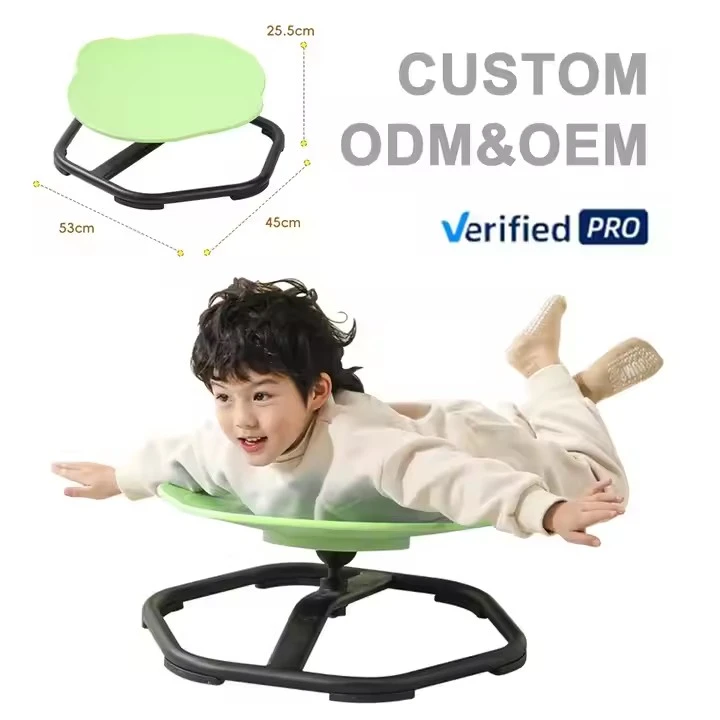
That's where sensory chairs come in. These chairs are designed to provide the body with specific types of sensory input that can stimulate the proprioceptive system. For example, some sensory chairs are designed to be swivel chairs. Check out this Swivel Chair for Kids with Autism. When a child sits in a swivel chair and starts to turn, the movement creates a centrifugal force. This force presses against the child's body, providing deep pressure input to the muscles and joints. The proprioceptive receptors in these areas then send signals to the brain, which helps the brain better understand the position and movement of the body.
The Autism Spinning Chair for Kids is another great option. Spinning in this chair gives the vestibular system a workout too. The vestibular system, located in our inner ear, is responsible for our sense of balance and spatial orientation. As the child spins, the fluid in the inner ear moves, sending signals to the brain about the body's rotation and position in space. This combination of proprioceptive and vestibular input from the spinning motion helps the child develop a better understanding of how their body moves and how it is positioned in the environment.
Then there's the Kids Sit and Spin Toy. This simple yet effective toy allows kids to control their own movement. They can spin at their own pace, stop and start whenever they want. This self - regulation of movement is really important for body awareness. When kids can control how they move, they learn to feel the different sensations in their body as they speed up, slow down, or change direction. It's like they're creating a mental map of their body's movement patterns.
But it's not just about spinning. Some sensory chairs are made with special materials that provide tactile input. For instance, chairs with bumpy or textured surfaces. When a child sits on these chairs, the different textures stimulate the nerve endings in their skin. This tactile input is sent to the brain, which further enhances the child's awareness of their body's contact with the chair and the surrounding environment.
Another aspect is the way sensory chairs can encourage active sitting. Unlike regular chairs where kids might slouch or sit passively, sensory chairs often require the child to engage their muscles to maintain balance and stability. For example, a chair with a rounded base forces the child to constantly adjust their body position to stay upright. This continuous muscle engagement gives the proprioceptive system a constant stream of information about the body's position and movement.
Now, let's talk about the long - term benefits of using sensory chairs for body awareness. When a child's body awareness improves, it has a positive ripple effect on other areas of their development. It can enhance their motor skills, as they have a better understanding of how to move their body parts precisely. This, in turn, can improve their performance in activities like writing, drawing, and playing sports.
Better body awareness also helps with social skills. When kids are more in tune with their body, they're less likely to accidentally bump into others or invade personal space. They can also better understand non - verbal cues from others, as they have a better sense of their own body language.
In educational settings, improved body awareness can lead to better focus and attention. When a child is more aware of their body, they're less distracted by uncomfortable or uncontrolled movements. They can sit still for longer periods and engage more fully in learning activities.
So, if you're a parent, teacher, or therapist looking to support a child's development of body awareness, sensory chairs are a fantastic tool. And as a sensory chair supplier, I'm here to help you find the perfect chair for your needs. Whether it's a swivel chair, a spinning chair, or a sit - and - spin toy, we have a wide range of options to choose from.

If you're interested in learning more about our sensory chairs or want to start a conversation about purchasing, don't hesitate to reach out. We're always happy to answer your questions and help you make the best decision for the kids you're working with. Let's work together to give these kids the gift of better body awareness and all the wonderful benefits that come with it.
References
- Ayres, A. J. (1972). Sensory integration and learning disorders. Western Psychological Services.
- Dunn, W. (1997). The sensory profile. American Occupational Therapy Association.
- Schaaf, R. C., & Miller, L. J. (2005). Sensory integration theory and practice. F. A. Davis.