

Hey there, fellow gymnastic enthusiasts! As a supplier of top - notch balance beams, I've spent a lot of time observing gymnastic competitions and chatting with judges. Today, I'm gonna break down how judges score a balance beam performance.
First off, let's talk about the two main components of a balance beam score: the difficulty score (D - score) and the execution score (E - score).
The Difficulty Score (D - score)
The D - score is all about how tough the routine is. Judges look at the skills a gymnast performs, and they assign a value to each one. The more complex the skill, the higher its value.
Gymnasts can choose from a wide range of skills, including acrobatic elements like flips, twists, and turns. For example, a double - backflip is way more difficult than a simple forward roll, so it'll have a higher value. There are also dance elements, such as leaps and spins. A split leap with a high height and good form is worth more than a basic jump.
To calculate the D - score, judges add up the values of the skills in the routine. But it's not just about throwing in as many hard skills as possible. Gymnasts also need to meet certain requirements. There are rules about the number of different types of skills, like the number of acrobatic and dance elements. They also need to perform skills in combinations. For instance, doing a flip right after a spin is considered a combination, and it can earn extra points.
The maximum D - score is theoretically unlimited, but in practice, it usually tops out around 6 - 7 points for elite gymnasts. This is because there are only so many high - value skills, and gymnasts have to fit them into a routine that lasts around 90 seconds.

The Execution Score (E - score)
The E - score is where the judge's subjective opinion comes in, but it's still based on some pretty clear criteria. This score is all about how well the gymnast performs the skills.
Form and Technique
One of the most important things judges look at is the gymnast's form. For acrobatic skills, they want to see straight legs, pointed toes, and a tight body position. A bent knee or a floppy arm can cost the gymnast points. In dance elements, good form means high leaps, clean lines, and a smooth flow.
For example, when a gymnast does a handspring on the balance beam, the judge will be checking that the hands land firmly on the beam, the body goes through a proper arc, and the feet land neatly. Any wobbles or uneven landings will result in deductions.
Balance and Stability
Since it's a balance beam, balance is obviously crucial. Judges are constantly watching to see if the gymnast can stay on the beam. A small step or a wobble might result in a minor deduction, while a fall off the beam is a major one. Even if a gymnast catches themselves before falling, they'll still lose some points.
Rhythm and Flow
A good routine has a nice rhythm and flow. Gymnasts should transition smoothly between skills, without any long pauses or jerky movements. The routine should feel like one continuous piece, rather than a bunch of separate skills thrown together.
The E - score starts at 10 and deductions are made for any mistakes. These deductions can range from 0.1 for a small error to 1.0 or more for a major mistake like a fall.
Other Factors
There are a few other things that can affect a gymnast's score.
Artistry
While not as heavily weighted as the D - score and E - score, artistry still plays a role. This includes things like the gymnast's expression, the way they interact with the audience, and the overall creativity of the routine. A gymnast who really sells the routine with a big smile and confident movements can earn a bit of a bonus.
Time Limit
Gymnasts have a set time limit for their balance beam routine, usually around 90 seconds. If they go over the time limit, they'll face a deduction. On the other hand, if they finish too quickly, it might suggest that they didn't include enough skills, which can also hurt their score.
How Our Balance Beams Can Help
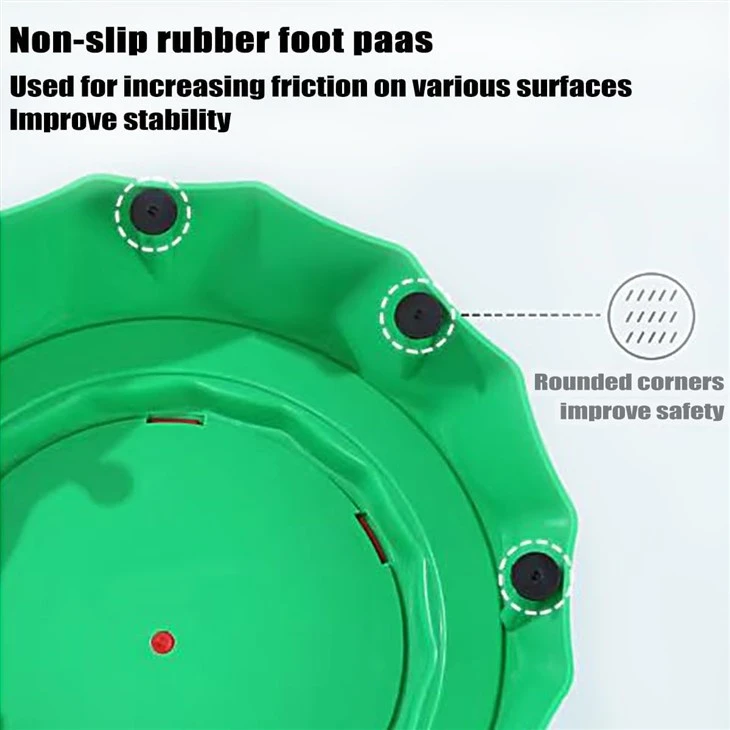
As a balance beam supplier, I know how important it is to have the right equipment. Our Kids Balance Beam Gymnastic Toy is perfect for young gymnasts just starting out. It's made of high - quality materials that are safe and durable. The beam has a non - slip surface, which helps kids stay balanced while they're learning new skills.
For more advanced gymnasts, our Non - Slip Plastic Balance Beams are a great choice. These beams are designed to meet the high standards of competitive gymnastics. They have a smooth surface that allows for easy movement, and the non - slip feature ensures that gymnasts can perform their skills safely.
And if you're looking for something a bit different, our Kids Balance Beam Stepping Stones are a fun way to improve balance and coordination. These stepping stones can be arranged in different patterns, providing a variety of challenges for kids.
Conclusion
Scoring a balance beam performance is a complex process that takes into account both the difficulty of the skills and the quality of the execution. As a balance beam supplier, I'm passionate about helping gymnasts of all levels improve their skills. Whether you're a beginner or an elite athlete, having the right balance beam can make a big difference in your performance.
If you're interested in purchasing our balance beams or have any questions about our products, don't hesitate to reach out. We're always happy to help you find the perfect balance beam for your needs. Let's work together to take your gymnastics to the next level!
References
- International Gymnastics Federation (FIG) Code of Points
- Various gymnastic coaching manuals and resources