

Cloth sensory toys have emerged as a powerful tool in fostering a child's development, particularly in the realm of problem - solving skills. As a supplier of high - quality cloth sensory toys, I've witnessed firsthand how these toys can engage young minds and help them navigate the challenges of the world around them.
Understanding Cloth Sensory Toys
Cloth sensory toys are designed to stimulate a child's senses through touch, sight, and sometimes even sound. They come in a variety of forms, from soft plush animals with different textures to interactive play structures made of fabric. These toys are not only fun but also serve a crucial developmental purpose.
One of the key features of cloth sensory toys is their tactile nature. The different textures, such as smooth satin, rough burlap, or fluffy fur, allow children to explore and distinguish between various sensations. This tactile exploration is the first step in developing problem - solving skills as it encourages children to interact with their environment in a hands - on way.
Sensory Exploration and Problem - Solving
When a child plays with a cloth sensory toy, they are constantly presented with new sensory experiences. For example, a Kids Play Gymnastics Parachute offers a unique tactile and visual experience. Children can feel the soft fabric in their hands as they hold and shake the parachute. They observe how the parachute billows and moves in the air, which raises questions in their minds. How can I make the parachute go higher? Why does it move in that way?
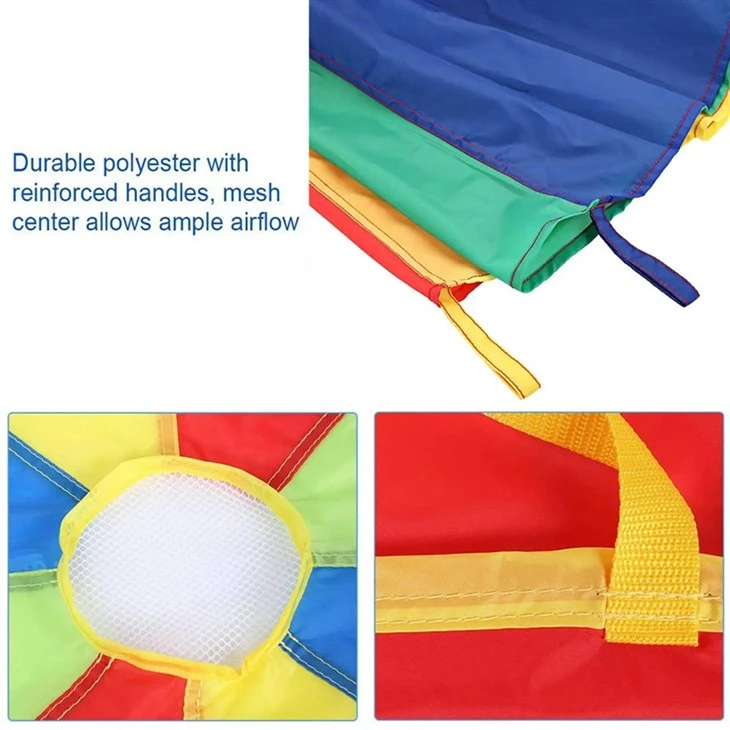
These questions are the building blocks of problem - solving. As children try to find answers, they engage in trial - and - error processes. They might experiment with different ways of shaking the parachute, changing the force or the angle. Through these experiments, they learn cause - and - effect relationships, which are fundamental to problem - solving.
Spatial Awareness and Problem - Solving
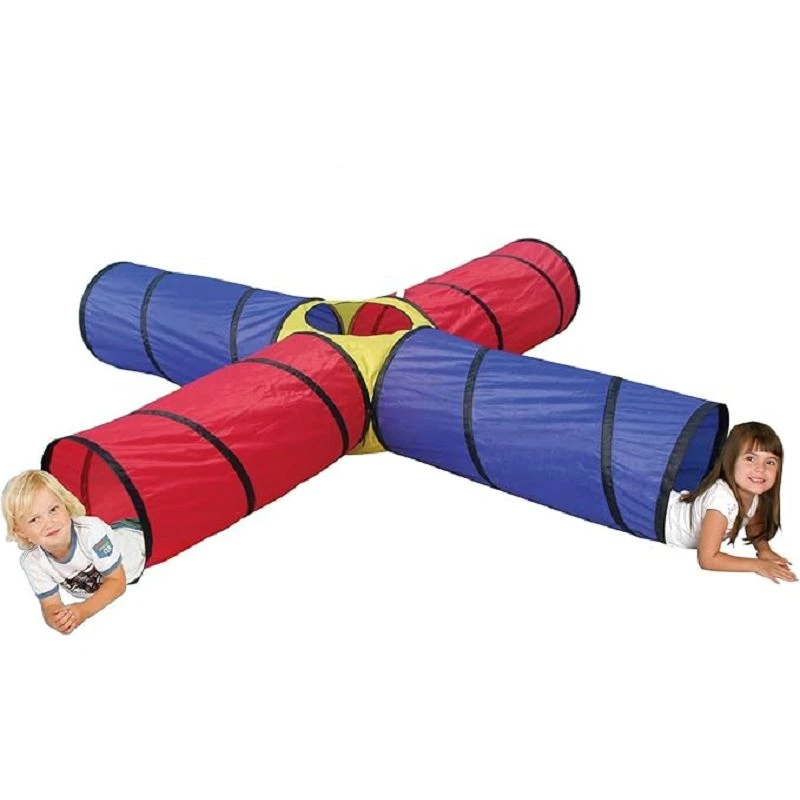
Cloth sensory toys also contribute to the development of spatial awareness, which is closely related to problem - solving. Toys like the Colorful Pop Up Crawl Tunnel Toy and Play Tunnel For Toddlers require children to navigate through a confined space.
When a child crawls through a tunnel, they need to understand the dimensions of the tunnel and their own body. They have to figure out how to move their limbs in a coordinated way to fit through the tunnel without getting stuck. This process of spatial negotiation helps them develop the ability to analyze a situation and come up with a solution.
For instance, if a child finds that they are too big to fit through a certain part of the tunnel, they might try to turn their body sideways or adjust their crawling speed. These are problem - solving strategies that they develop through hands - on experience with the toy.
Social Problem - Solving with Cloth Sensory Toys
Many cloth sensory toys are designed for group play, which provides an opportunity for children to develop social problem - solving skills. When children play with a parachute together, they need to cooperate and communicate with each other. They have to decide how to hold the parachute, when to shake it, and how to move as a group.
In a group play scenario, conflicts may arise. For example, two children might want to hold the same part of the parachute. This is where social problem - solving skills come into play. Children learn to negotiate, compromise, and find solutions that satisfy everyone. They might take turns holding the parachute or find a way to share the space. These social problem - solving skills are essential for their future interactions in school and society.
Creativity and Problem - Solving
Cloth sensory toys are highly versatile, which encourages creativity in children. A simple piece of cloth can be transformed into a cape, a tent, or a pretend boat. When children use their imagination to create different scenarios with the toys, they are also developing problem - solving skills.
For example, if a child wants to turn a piece of cloth into a tent, they need to figure out how to support the cloth so that it stays up. They might use chairs or other objects as supports. This process of creative problem - solving allows them to think outside the box and come up with innovative solutions.
Cognitive Development and Problem - Solving
From a cognitive perspective, cloth sensory toys help children develop memory, attention, and decision - making skills, all of which are crucial for problem - solving. When a child plays with a multi - textured cloth toy, they need to remember which part of the toy has which texture. This exercise in memory helps them organize information in their minds.
Attention is also important. Children need to focus on the sensory details of the toy to fully explore and understand it. For example, when they are feeling the different textures on a plush animal, they need to pay attention to the differences in smoothness, roughness, and softness. This focused attention allows them to make more informed decisions about how to interact with the toy.
The Role of Parents and Educators
Parents and educators play a vital role in supporting children's problem - solving skills through cloth sensory toys. They can ask open - ended questions when children are playing with the toys. For example, when a child is playing with a tunnel, an adult can ask, "How do you think you can make it easier to crawl through the tunnel?" This encourages children to think critically and come up with their own solutions.
Adults can also model problem - solving behavior. If a child is having trouble with a toy, an adult can demonstrate how to approach the problem step by step. However, it's important to give children enough space to try on their own first, so that they can develop their independent problem - solving abilities.
Conclusion
In conclusion, cloth sensory toys are invaluable tools for supporting problem - solving skills in children. Through sensory exploration, spatial awareness, social interaction, creativity, and cognitive development, these toys provide a rich learning environment for children to develop the skills they need to solve problems in various aspects of their lives.
As a supplier of cloth sensory toys, I am committed to providing high - quality products that not only entertain but also educate. If you are interested in purchasing our cloth sensory toys for your children, school, or daycare center, I invite you to contact us for a procurement discussion. We can offer you a wide range of options to meet your specific needs.
References
- Berk, L. E. (2018). Development Through the Lifespan. Pearson.
- Siegel, D. J., & Bryson, T. P. (2011). The Whole - Brain Child: 12 Revolutionary Strategies to Nurture Your Child's Developing Mind. Random House.
- Frost, J. L., Wortham, S. C., & Reifel, S. (2012). Play and Child Development. Pearson.