

Hey there! As a balance board supplier, I often get asked about how adjustable balance boards work. It's a super interesting topic, and I'm excited to break it down for you.
First off, let's understand what an adjustable balance board is. Unlike regular balance boards that have a fixed shape and level of difficulty, adjustable balance boards give you the flexibility to change things up. This means you can make the board more or less challenging depending on your skill level, fitness goals, or the specific activity you're doing.
The Basic Mechanics
At the heart of an adjustable balance board is its ability to alter its surface and stability. Most adjustable balance boards have a base and a top platform. The base is usually what provides the support and is often flat or has a slight curve. The top platform is where you stand, and it's the part that can be adjusted.
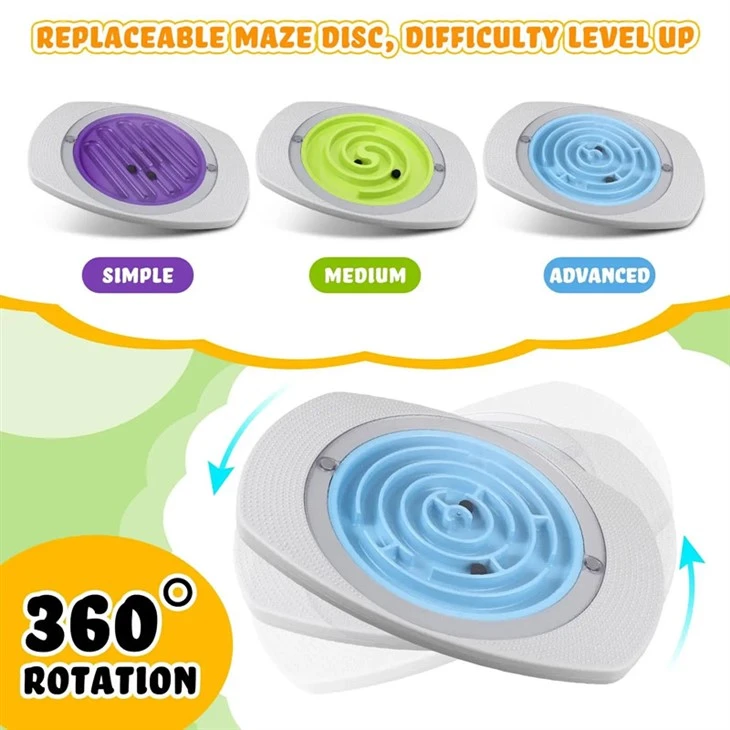
There are a few different ways these boards can be adjusted. Some use interchangeable parts. For example, you might have a set of inserts with different shapes and sizes. You can swap these inserts in and out of the board to change the way it rocks and moves. If you're a beginner, you might start with a more stable insert that has a wider base and less movement. As you get better at balancing, you can switch to a more challenging insert that has a narrower base and more dynamic movement.
Other adjustable balance boards use a mechanism to change the angle or curvature of the board itself. This could be something as simple as a screw or lever that you can turn to adjust the shape. By increasing the angle or curvature, you make the board more unstable, which in turn makes it more difficult to balance on.
How Your Body Reacts
Now, let's talk about what happens to your body when you use an adjustable balance board. When you step onto the board, your body immediately senses the instability. Your brain kicks into gear, sending signals to your muscles to contract and relax in order to keep you upright. This process is called proprioception, which is your body's ability to sense its position in space.
As you move around on the board, your muscles have to constantly adjust to the changing surface. This works a whole bunch of different muscle groups, especially in your legs, core, and even your arms. Your quadriceps, hamstrings, and glutes are all engaged as they try to keep your legs steady. Your core muscles, including your abs and back muscles, work to keep your torso stable. And your arms might be used for balance, too, as you reach out to steady yourself.
Using an adjustable balance board is also great for improving your coordination and agility. Since the board is constantly moving, you have to learn to react quickly to changes in its position. This helps to train your brain and your muscles to work together more efficiently.
Benefits of Using Adjustable Balance Boards
There are a ton of benefits to using adjustable balance boards. For starters, they're a fun and effective way to get some exercise. You can use them at home, in the gym, or even outdoors. They're also a great option for people of all ages and fitness levels. Whether you're a kid looking to have some fun, an athlete looking to improve your performance, or an older adult looking to maintain your balance and mobility, an adjustable balance board can be a great addition to your routine.
In addition to the physical benefits, using an adjustable balance board can also have mental benefits. The concentration and focus required to balance on the board can help to improve your cognitive function. It can also be a great way to relieve stress and clear your mind.
Different Types of Adjustable Balance Boards
As a balance board supplier, I offer a variety of adjustable balance boards to meet different needs and preferences. One popular option is the Curvy Rocker Board for Yoga. This board is designed specifically for yoga and other balance-based exercises. It has a unique curved shape that allows for a wide range of movement, making it perfect for stretching and strengthening your muscles.
Another great option is the Montessori Waldorf Toy. This board is not only a fun toy for kids, but it also helps to develop their balance, coordination, and spatial awareness. It's made from high-quality materials and is designed to be safe and durable.
If you're looking for a more versatile option, check out our Versatile Rocking Balance Boards. These boards can be adjusted to different levels of difficulty, making them suitable for both beginners and advanced users. They can be used for a variety of activities, including balance training, core strengthening, and even rehabilitation.
How to Choose the Right Adjustable Balance Board
When choosing an adjustable balance board, there are a few things to consider. First, think about your skill level and fitness goals. If you're a beginner, you'll want to start with a board that's more stable and easier to balance on. As you get better, you can gradually move up to a more challenging board.
Next, consider the type of activities you'll be using the board for. If you're planning to use it for yoga or other balance-based exercises, you'll want a board that has a smooth surface and allows for a wide range of movement. If you're using it for more dynamic activities, like sports training or rehabilitation, you might want a board that can be adjusted to different levels of difficulty.

Finally, think about the size and weight of the board. You'll want to choose a board that's the right size for your body and that you can easily move around. Make sure the board is also sturdy and well-made, so it can withstand regular use.
Contact Us for Purchasing
If you're interested in purchasing an adjustable balance board, I'd love to hear from you. We offer a wide range of high-quality balance boards at competitive prices. Whether you're a retailer looking to stock our products or an individual looking to buy a board for personal use, we can help. Just reach out to us, and we'll be happy to discuss your needs and answer any questions you might have.
References
- Gray, D. (2018). Balance Training: A Comprehensive Guide. Human Kinetics.
- Kane, J. (2020). The Benefits of Proprioceptive Training. Journal of Sports Science and Medicine.
- Smith, R. (2019). Adjustable Balance Boards: How They Work and Why You Need One. Fitness Magazine.