

Hey there! As a balance board supplier, I've been fielding a ton of questions lately about how accurate the sensors on balance boards are. It's a super important topic, especially for those who are relying on these boards for physical therapy, fitness training, or just plain fun. So, I thought I'd take some time to break it down for you.
First off, let's talk about what these sensors actually do. In a nutshell, the sensors on balance boards are designed to detect the user's movement and weight distribution. They pick up on every little shift, tilt, and sway, translating those movements into data that can be used for various purposes. For example, in a fitness context, the data can be used to track your progress, measure your balance improvement over time, or even create personalized workout routines.
Now, the accuracy of these sensors can vary quite a bit depending on a few key factors. One of the biggest factors is the quality of the sensors themselves. Just like with any other piece of technology, you get what you pay for. Higher-end balance boards tend to use more advanced sensors that are more precise and reliable. These sensors are usually able to detect even the slightest movements, giving you a more accurate picture of your balance and movement patterns.
Another factor that can affect sensor accuracy is the calibration of the balance board. Calibration is the process of adjusting the sensors to ensure that they are providing accurate readings. Most balance boards come with a calibration feature that allows you to set the board to your specific weight and movement patterns. It's really important to follow the calibration instructions carefully to get the most accurate results. If the board isn't calibrated correctly, the sensor readings may be off, which can lead to inaccurate data and a less effective workout or therapy session.
The surface on which you use the balance board can also have an impact on sensor accuracy. A smooth, flat surface is ideal, as it allows the board to move freely and the sensors to detect your movements accurately. If you're using the board on a rough or uneven surface, it can cause the board to wobble or tilt in unexpected ways, which can throw off the sensor readings. So, make sure you choose a stable, level surface for the best results.
Let's take a look at some of the different types of balance boards and how their sensors work. There are several popular options on the market, each with its own unique features and sensor technology.
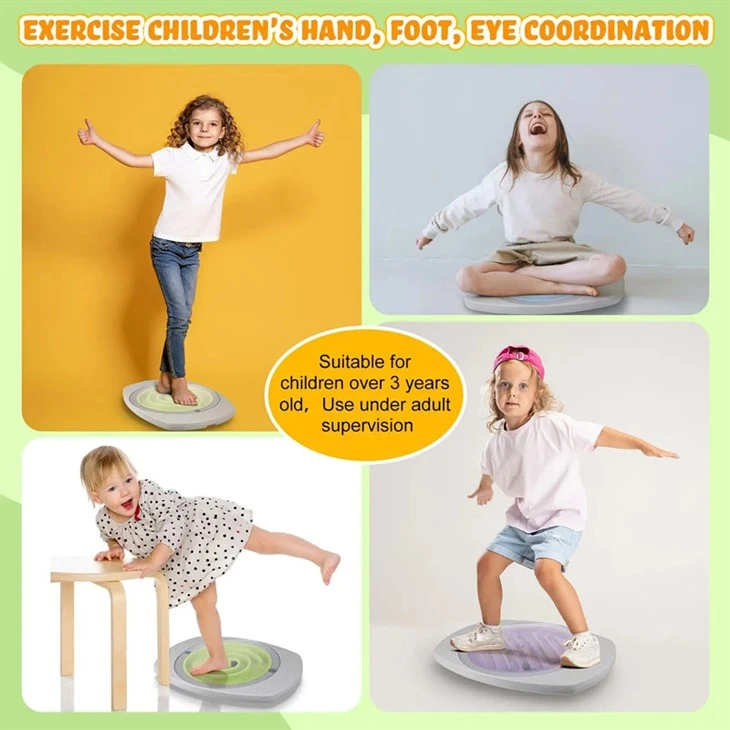
One type of balance board is the Wobble Board for Toddlers. These boards are designed specifically for young children and are a great way to help them develop their balance and coordination skills. The sensors on these boards are typically less complex than those on adult boards, but they are still able to detect the basic movements of a toddler. They're usually calibrated to be more forgiving, allowing for a wider range of movement without triggering false readings.
For older kids, there's the Balance Board for Kids. These boards are a bit more advanced and often come with additional features, such as built-in games or challenges that use the sensor data to make the experience more engaging. The sensors on these boards are designed to be more accurate and responsive, allowing kids to get a better workout and improve their balance more effectively.
Then, there are the Versatile Rocking Balance Boards, which are suitable for users of all ages. These boards are highly versatile and can be used for a variety of activities, from yoga and Pilates to strength training and rehabilitation. The sensors on these boards are usually top-of-the-line, providing precise and detailed data about your movements. They're able to detect even the subtlest changes in weight distribution and movement, making them a great choice for serious fitness enthusiasts and those undergoing physical therapy.
So, how can you tell if the sensors on a balance board are accurate? One way is to look at the reviews and ratings from other users. Real-world feedback can give you a good idea of how well the sensors perform in actual use. You can also look for balance boards that have been tested and certified by independent organizations. These certifications can provide an extra level of assurance that the sensors are accurate and reliable.
In my experience as a balance board supplier, I've found that most users are very satisfied with the accuracy of the sensors on modern balance boards. However, it's important to remember that no sensor is perfect, and there may be some minor variations in readings from time to time. But as long as you choose a high-quality balance board, calibrate it correctly, and use it on a suitable surface, you should be able to get accurate and useful data from the sensors.
If you're in the market for a balance board, I'd encourage you to do your research and choose a board that meets your specific needs and budget. Consider the type of activities you'll be using the board for, the age and skill level of the user, and the features and sensor technology that are most important to you. And if you have any questions or need more information, don't hesitate to reach out to me. I'm always happy to help you find the perfect balance board for your needs.
Whether you're looking to improve your balance, enhance your fitness routine, or help your child develop their motor skills, a balance board with accurate sensors can be a valuable tool. So, take the time to choose the right board, and start reaping the benefits of better balance and coordination today!
If you're interested in purchasing a balance board or have any questions about our products, feel free to contact us for a procurement discussion. We're here to help you find the best solution for your needs.
References:

- Personal experience as a balance board supplier.
- Industry knowledge of balance board technology and sensor accuracy.