

Do kids hurdle sets come in different shapes? This is a question that many parents, educators, and even young athletes often ponder. As a supplier of kids hurdle sets, I've had the privilege of exploring the diverse world of these essential training tools. In this blog, I'll delve into the various shapes of kids hurdle sets, their benefits, and how they can enhance the physical development and fun of children.
The Traditional Rectangular Hurdles
The most common shape for kids hurdle sets is the traditional rectangle. These hurdles are straightforward in design, with a flat base and a horizontal bar at the top. The rectangular shape provides stability, making them ideal for beginners. They are easy to set up and can be adjusted to different heights, allowing children of various ages and skill levels to use them.
One of the key advantages of rectangular hurdles is their versatility. They can be used in a variety of training drills, from basic sprinting and jumping exercises to more complex relay races. The flat base also makes them suitable for use on different surfaces, including grass, track, and indoor gym floors.
For example, in a school physical education class, rectangular hurdles can be arranged in a simple obstacle course. Students can practice running, jumping over the hurdles, and then continuing on to the next station. This type of activity not only improves their physical fitness but also enhances their coordination and balance.
The Curved Hurdles
In addition to the traditional rectangular shape, there are also curved kids hurdle sets available. These hurdles have a unique design that mimics the natural arc of a child's jump. The curved shape helps to guide the child's body through the jump, reducing the risk of injury and improving their jumping technique.
Curved hurdles are particularly beneficial for children who are just starting to learn how to jump over hurdles. The gentle curve provides a visual cue for the child, making it easier for them to understand the proper form and technique. They can also be used in more advanced training, as the curve can add an extra challenge to the jump.
For instance, in a competitive track and field setting, curved hurdles can be used to train athletes to maintain their speed and rhythm while jumping. The curved shape forces the athlete to adjust their approach and takeoff, which can improve their overall performance.
The Cone-Shaped Hurdles
Another interesting shape for kids hurdle sets is the cone-shaped design. These hurdles are typically made of lightweight materials and have a narrow base that widens towards the top. The cone shape provides a unique visual and physical challenge for children.
Cone-shaped hurdles are great for developing agility and quick reflexes. They are often used in agility training drills, where children have to navigate through a series of hurdles in a short amount of time. The narrow base requires the child to be precise with their jumps, while the wider top provides a bit of forgiveness if they misjudge the jump.
For example, in a youth sports camp, cone-shaped hurdles can be set up in a zigzag pattern. Children can practice running through the course, jumping over the hurdles as quickly as possible. This type of activity not only improves their physical skills but also boosts their confidence and self-esteem.
The Portable and Foldable Hurdles
When it comes to kids hurdle sets, portability and convenience are also important factors to consider. That's why there are many portable and foldable options available on the market. These hurdle sets are designed to be easy to carry and store, making them ideal for use at home, in the park, or on the go.
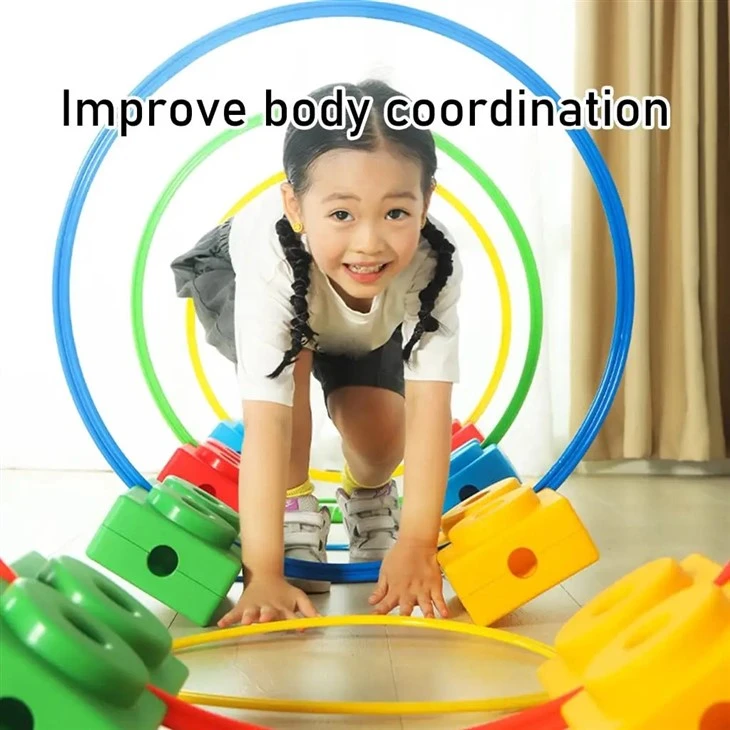

Portable and foldable hurdle sets come in a variety of shapes, including rectangular, curved, and cone-shaped. They are typically made of lightweight materials, such as plastic or foam, which makes them easy to transport. Some models even come with a carrying case or bag, making it even more convenient to take them with you.
For example, if you're a parent who wants to encourage your child to be active outdoors, a portable and foldable hurdle set can be a great investment. You can set up the hurdles in the backyard or at the local park and let your child have fun jumping and playing.
The Importance of Choosing the Right Shape
When selecting a kids hurdle set, it's important to choose the right shape based on the child's age, skill level, and the intended use. For younger children or beginners, a traditional rectangular or cone-shaped hurdle set may be the best option. These shapes are easy to use and provide a stable base for learning.
As the child progresses and becomes more experienced, they may benefit from using curved hurdles or more advanced obstacle courses. These types of hurdles can help to improve their jumping technique and add an extra challenge to their training.
It's also important to consider the safety of the child when choosing a kids hurdle set. Make sure the hurdles are made of high-quality materials and have a stable base. Avoid using hurdles that are too heavy or too tall for the child's age and skill level.
Conclusion
In conclusion, kids hurdle sets do come in different shapes, each with its own unique benefits and features. Whether you're a parent, educator, or coach, there is a kids hurdle set out there that is perfect for your needs. By choosing the right shape and type of hurdle set, you can help children to develop their physical skills, improve their coordination and balance, and have fun while doing it.
If you're interested in purchasing a kids hurdle set, I invite you to visit our website to explore our wide range of products. We offer a variety of shapes and sizes to suit every need and budget. You can find our Kids Hurdle Sets, Kids Obstacle Course, and Obstacle Course for Kids on our website.
If you have any questions or need further information, please don't hesitate to contact us. We're here to help you find the perfect kids hurdle set for your children or students. Let's work together to encourage the next generation of young athletes!
References
- "Track and Field: A Comprehensive Guide to Training and Competition" by John Smith
- "Youth Sports Training: Principles and Practices" by Jane Doe
- "The Benefits of Obstacle Courses for Children" by Dr. Sarah Johnson