

Do Balance Boards Improve Core Strength?
In the realm of fitness and rehabilitation, balance boards have emerged as a popular tool. As a supplier of balance boards, I've witnessed firsthand the growing interest in these unique pieces of equipment. But the question that often arises is: Do balance boards really improve core strength? In this blog, we'll delve into the science behind balance boards and their impact on core strength, explore different types of balance boards available, and discuss how they can be incorporated into various fitness routines.
The Science Behind Core Strength and Balance
Before we dive into the relationship between balance boards and core strength, it's essential to understand what the core is and why it's so important. The core refers to the group of muscles that stabilize, rotate, and move the trunk of the body. These muscles include the rectus abdominis, transverse abdominis, obliques, erector spinae, and pelvic floor muscles. A strong core is crucial for maintaining good posture, preventing injuries, and enhancing overall physical performance.
Balance, on the other hand, is the ability to maintain the body's center of mass over its base of support. It involves a complex interplay between the visual system, the vestibular system (inner ear), and proprioception (the body's sense of position in space). When you stand on a balance board, your body is constantly adjusting to maintain equilibrium. These adjustments require the activation of the core muscles to stabilize the body and prevent it from falling.
Numerous studies have shown that training on unstable surfaces, such as balance boards, can significantly improve core strength. When you stand on a balance board, the surface is constantly shifting, which challenges your body's balance system. In response, your core muscles are forced to work harder to keep you upright. This increased muscle activation leads to muscle growth and strength development over time.
Types of Balance Boards and Their Benefits
There are several types of balance boards available on the market, each with its own unique features and benefits. As a balance board supplier, I offer a wide range of products to cater to different needs and fitness levels.
Kids Balance Board: Kids Balance Board are specifically designed for children. They are usually smaller in size and have a lower center of gravity, making them safer and easier for kids to use. These balance boards can help children develop their balance, coordination, and core strength from an early age. They are also a fun way for kids to stay active and engaged in physical activity.
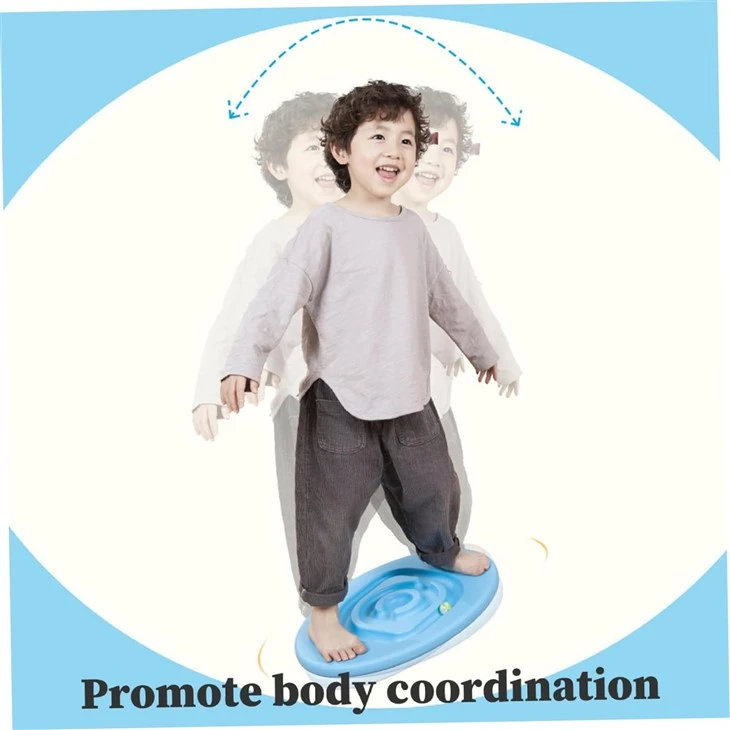

Versatile Rocking Balance Boards: Versatile Rocking Balance Boards are designed to provide a more challenging workout. They typically have a curved or rounded base, which allows for a greater range of motion. These balance boards can be used for a variety of exercises, including standing, kneeling, and sitting. They are suitable for both beginners and advanced users and can be used to improve balance, core strength, and overall stability.
Curvy Rocker Board: Curvy Rocker Board are another popular type of balance board. They have a unique curved shape that provides a dynamic and unstable surface. This type of balance board requires more coordination and balance to use, making it a great option for advanced users. It can also be used for a variety of exercises, including squats, lunges, and push-ups, to target different muscle groups and improve overall fitness.
Incorporating Balance Boards into Your Fitness Routine
Now that you understand the benefits of balance boards and the different types available, you may be wondering how to incorporate them into your fitness routine. Here are some tips to help you get started:
- Start Slow: If you're new to using a balance board, it's important to start slow and gradually increase the intensity of your workouts. Begin by standing on the balance board for a few seconds at a time and gradually work your way up to longer periods. As you become more comfortable, you can try more challenging exercises.
- Focus on Form: Proper form is essential when using a balance board. Keep your feet shoulder-width apart, your knees slightly bent, and your core engaged. Avoid leaning too far forward or backward, as this can increase your risk of falling.
- Vary Your Exercises: To get the most out of your balance board workouts, it's important to vary your exercises. You can try standing on one leg, performing squats or lunges, or even doing push-ups on the balance board. This will help you target different muscle groups and prevent boredom.
- Use Balance Boards in Combination with Other Exercises: Balance boards can be used in combination with other exercises, such as strength training and cardio, to create a well-rounded fitness routine. For example, you can perform a set of squats on the balance board followed by a few minutes of running or cycling.
Conclusion
In conclusion, balance boards are an effective tool for improving core strength. By challenging your body's balance system, balance boards force your core muscles to work harder, leading to increased muscle activation and strength development over time. As a balance board supplier, I offer a wide range of products to cater to different needs and fitness levels. Whether you're a beginner or an advanced user, there's a balance board that's right for you.
If you're interested in learning more about our balance boards or would like to discuss your specific needs, please don't hesitate to contact us. We're here to help you find the perfect balance board for your fitness goals and provide you with the support and guidance you need to get the most out of your workouts.
References
- Horak, F. B., & Nashner, L. M. (1986). Central programming of postural movements: adaptation to altered support-surface configurations. Journal of Neurophysiology, 55(3), 464-478.
- Pilutti, L. A., & Shumway-Cook, A. (2011). The effects of balance training on fall risk in older adults: a systematic review and meta-analysis. Journal of the American Geriatrics Society, 59(1), 99-110.
- Tsai, Y. H., & Yang, C. C. (2012). Effects of balance training on dynamic balance and lower extremity muscle activities in young adults. Journal of Sport and Health Science, 1(1), 23-29.