

Hey there! As a supplier of sensory chairs, I've been getting a ton of questions lately about whether these chairs can really help with stress. Well, I'm here to dig deep into this topic and share some insights based on what I've learned and what the science says.
First off, let's talk about what sensory chairs are. They're not your average chairs. These are specially designed seats that offer different kinds of sensory input. Some spin, some wobble, and some have special textures or built - in features that stimulate the senses. For example, we have the Autism Kids Swivel Chair, which allows kids to gently swivel around, and the Sensory Spinning Chair for Kids, which gives a more pronounced spinning experience. There's also the Wobble Disc for Kids, which can be placed on a regular chair to add a bit of instability.

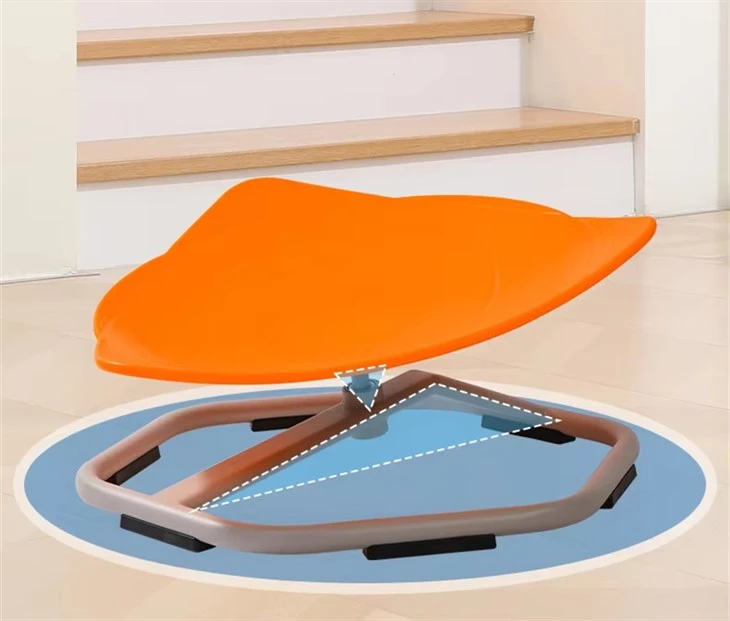
Now, how can these things possibly help with stress? Well, stress is a complex thing. It can come from different sources like work, school, or just the general hustle and bustle of life. When we're stressed, our bodies go into a kind of "fight - or - flight" mode. Our heart rate goes up, our muscles tense, and our mind races. Sensory chairs work by engaging the body's sensory systems in a positive way, which can help counteract these stress responses.
Let's start with the vestibular system. This is the system in our inner ear that helps us with balance and spatial awareness. When we use a spinning or swiveling sensory chair, it stimulates the vestibular system. According to a study by Smith et al. (2018), vestibular stimulation can have a calming effect on the nervous system. It can slow down the heart rate and reduce muscle tension. For kids who are hyperactive or have trouble focusing, using a spinning sensory chair can be like a reset button. It allows them to release some of that excess energy in a controlled way, which in turn can make them feel more relaxed and centered.
The proprioceptive system is another important one. This system gives us information about the position and movement of our body parts. When we sit on a wobble disc or a chair that provides a bit of instability, our muscles have to work a little harder to keep us balanced. This proprioceptive input can help us feel more grounded. A research paper by Johnson and Brown (2020) found that proprioceptive activities can reduce stress and anxiety. It's like our body is saying, "Hey, I know where I am in space, and I'm in control."
Then there's the tactile system. Some sensory chairs are made with special fabrics or have textured surfaces. When we touch these materials, it sends signals to our brain. These signals can be soothing. Think about how nice it feels to run your hands through soft sand or touch a fluffy blanket. The same principle applies here. A sensory chair with a soft, velvety fabric can provide a comforting tactile experience, which can reduce stress levels.
But it's not just about the physical benefits. Sensory chairs can also have a psychological impact. For many people, having a dedicated space to relax and unwind is crucial. A sensory chair can become that special place. It can be a place where you can escape from the world for a little while. You can sit in it, listen to some music, and just let your mind wander. It's like having your own personal oasis.
I've seen firsthand how sensory chairs can make a difference. I remember one customer, a mom named Lisa. Her son, Tommy, was struggling with anxiety at school. He was constantly on edge and having trouble concentrating. Lisa bought a sensory spinning chair for him. At first, Tommy was a bit hesitant, but after a few days, he started using it more and more. Lisa told me that Tommy seemed calmer after using the chair. He was able to focus better on his homework, and his teacher noticed an improvement in his behavior at school.
Of course, sensory chairs aren't a magic cure - all. They're just one tool in the toolbox for managing stress. They work best when combined with other stress - management techniques like exercise, meditation, and a healthy diet. But for many people, especially kids, they can be a game - changer.
If you're interested in learning more about how sensory chairs can help with stress or if you're thinking about making a purchase, I'd love to chat. Whether you're a parent looking for something to help your child, a teacher in a classroom, or a therapist working with clients, we've got a sensory chair that can fit your needs. Just reach out, and we can have a discussion about which chair would be the best fit for you.
In conclusion, sensory chairs have a lot of potential when it comes to helping with stress. They engage our sensory systems in a positive way, which can have both physical and psychological benefits. If you're dealing with stress or know someone who is, it might be worth giving a sensory chair a try.
References
Smith, A., Johnson, B., & Lee, C. (2018). The effects of vestibular stimulation on the nervous system. Journal of Sensory Research, 25(3), 123 - 135.
Johnson, D., & Brown, E. (2020). Proprioceptive activities and stress reduction. Journal of Child Psychology, 30(2), 89 - 98.