

Sensory obstacle courses have gained significant popularity in recent years, offering a dynamic and engaging way for children to develop various skills, including motor skills, sensory integration, and cognitive abilities. These courses typically incorporate a variety of elements, such as tunnels, balance beams, and climbing structures, designed to stimulate different senses. One question that often arises is whether cloth sensory toys can be effectively used in a sensory obstacle course. In this blog post, I'll explore this topic from the perspective of a cloth sensory toys supplier, highlighting the benefits, potential applications, and considerations.
Benefits of Using Cloth Sensory Toys in Sensory Obstacle Courses
Cloth sensory toys bring a unique set of advantages to sensory obstacle courses. First and foremost, they offer a soft and tactile experience that is gentle on a child's skin. Unlike some hard plastic or metal toys, cloth toys are less likely to cause injury during play, making them a safe option for obstacle courses. The texture of the cloth can also provide valuable sensory input, helping children to develop their sense of touch. For example, a plush cloth ball can offer a different tactile sensation compared to a smooth plastic one, which can enhance the overall sensory experience of the course.
Another benefit is the versatility of cloth sensory toys. They come in a wide range of shapes, sizes, and colors, which can be used to create a visually appealing and stimulating environment. For instance, a large Kids Play Gymnastics Parachute can be used as a large, soft surface for children to crawl under or over. It can also be manipulated in different ways, such as being shaken to create movement and sound, adding an auditory and visual element to the course.
Cloth sensory toys are also lightweight and easy to transport and set up. This makes them ideal for creating temporary or mobile sensory obstacle courses, whether it's in a classroom, a therapy center, or even in a backyard. Teachers and therapists can easily adjust the course layout by rearranging the cloth toys to meet the changing needs and interests of the children.
Potential Applications of Cloth Sensory Toys in Sensory Obstacle Courses
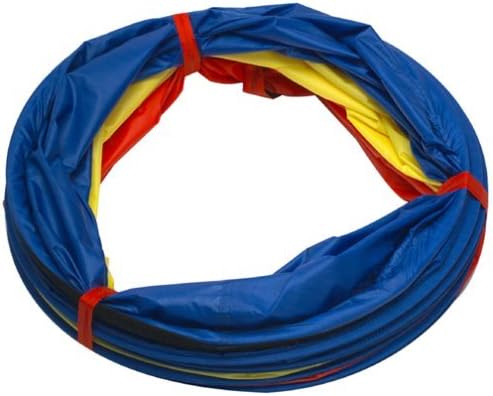
There are numerous ways to incorporate cloth sensory toys into a sensory obstacle course. One common application is using cloth tunnels, such as the Colorful Pop Up Crawl Tunnel Toy. Children can crawl through these tunnels, which provides proprioceptive and vestibular input. Proprioception is the sense of the position and movement of our body parts, and crawling through a tunnel helps children to develop this sense as they navigate the confined space. The vestibular system, which is responsible for balance and spatial orientation, is also stimulated as children move through the tunnel.
Cloth balls can be used in different ways as well. They can be placed at various points in the course for children to kick, throw, or catch. This not only provides sensory input through touch and movement but also helps to develop hand - eye coordination and gross motor skills. For example, a child might have to kick a cloth ball through a small opening in a cloth wall or catch it while running along a balance beam.
Soft cloth mats or rugs can be used to create different surfaces within the course. A thick, plush mat can provide a soft landing area for children when they jump or fall, while a textured mat can offer additional tactile stimulation. These mats can be arranged in a pattern to create a more complex and challenging course.
The Kids Play Parachute is another versatile toy that can be used in multiple ways. Children can hold the edges of the parachute and shake it together, creating a wave - like motion. This activity requires cooperation and communication among the children, in addition to providing sensory input through touch, movement, and sound. The parachute can also be used as a hiding place or a tent, adding an element of imagination and play to the course.
Considerations When Using Cloth Sensory Toys in Sensory Obstacle Courses
While cloth sensory toys offer many benefits, there are also some considerations to keep in mind. One important factor is durability. Since children will be actively interacting with the toys during the obstacle course, the toys need to be able to withstand repeated use and rough handling. Look for cloth toys that are made from high - quality materials and have strong stitching. For example, the seams of a cloth tunnel should be reinforced to prevent tearing when children crawl through it.
Cleanliness is another crucial consideration. Cloth toys can absorb dirt, sweat, and other contaminants during play. It's important to choose toys that are easy to clean. Most cloth sensory toys can be machine - washed, but make sure to follow the manufacturer's instructions to avoid damaging the toys. Regular cleaning helps to maintain a hygienic environment for the children.
Safety is always a top priority. Check the toys for any small parts that could pose a choking hazard, especially if the course is designed for younger children. Make sure that the toys are properly secured in the course to prevent them from falling or collapsing during use. For example, if a cloth structure is used, it should be anchored firmly to the ground.
Conclusion and Call to Action
In conclusion, cloth sensory toys can be a valuable addition to a sensory obstacle course. They offer a soft, tactile, and versatile experience that can enhance the overall sensory development of children. With their many benefits and potential applications, they can help create a fun and engaging environment for learning and play.
If you're interested in incorporating high - quality cloth sensory toys into your sensory obstacle courses, whether you're an educator, a therapist, or a parent, I invite you to reach out to me. As a supplier of cloth sensory toys, I can provide you with a wide range of products that meet your specific needs and requirements. Let's work together to create an exciting and effective sensory experience for the children in your care.
References
- Ayres, A. J. (1972). Sensory integration and learning disorders. Western Psychological Services.
- Dunn, W. (1997). The sensory profile. American Occupational Therapy Association.
- Fisher, A. G., Murray, E. A., & Bundy, A. C. (2016). Sensory integration: Theory and practice (4th ed.). F. A. Davis Company.