

Hey there! As a supplier of jumping boards, I often get asked this question: "Can a jumping board be used for dance?" Well, let's dive right into it and explore this interesting topic.
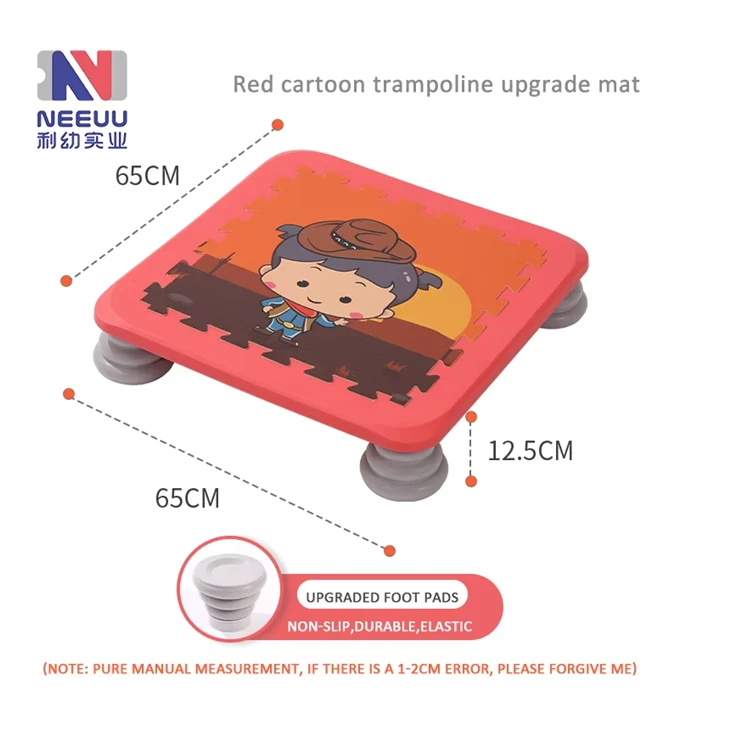
First off, what exactly is a jumping board? For those who aren't familiar, it's a type of equipment that usually consists of a spring - loaded platform. It provides a bit of bounce when you jump on it. You might have seen Indoor Small Trampoline for Kids or Kids Mini Trampoline which are similar in concept, offering a fun and active way to play.
Now, back to the main question. Can you use a jumping board for dance? The short answer is yes! And there are quite a few reasons why it can work really well.
The Advantages of Using a Jumping Board for Dance
1. Added Dynamic Movement
One of the biggest perks is the extra dynamic movement it brings to your dance. When you're on a regular floor, your movements are pretty much limited to the force you can generate on your own. But on a jumping board, the bounce can give your jumps an extra lift. This means higher leaps, more powerful kicks, and a generally more energetic dance performance. It can add a whole new dimension to your choreography, making it look more exciting and engaging.
2. Sensory Experience
Dance isn't just about the visual aspect; it's also about how it feels. A jumping board provides a unique sensory experience. The constant up - and - down motion stimulates your vestibular system, which is responsible for your sense of balance and spatial orientation. This can enhance your overall body awareness while dancing. For kids, especially those who might benefit from Autisms Kids Sensory Integration Training, using a jumping board for dance can be a great way to improve their sensory integration skills while having fun.
3. Strengthening Muscles
Dancing on a jumping board requires you to engage your muscles in different ways compared to dancing on a flat surface. The constant adjustment to the bounce helps strengthen your leg muscles, including your calves, quadriceps, and hamstrings. It also works on your core muscles as you try to maintain your balance. Over time, this can lead to better muscle tone and improved dance performance.
Types of Dance Suitable for a Jumping Board
1. Hip - Hop
Hip - hop dance is all about high - energy moves, big jumps, and dynamic footwork. A jumping board can be a perfect match for hip - hop. You can use the bounce to execute higher breakdancing freezes, more powerful pop - lock moves, and even add some extra flair to your moonwalks. The board's springiness allows you to really go for it and make your hip - hop routine stand out.
2. Jazz
Jazz dance involves a lot of leaps, turns, and quick movements. The added bounce from a jumping board can enhance the grace and fluidity of these movements. For example, when you're doing a grand jeté, the board can give you that extra height and distance, making the move look even more impressive. It can also add a bit of playfulness to your jazz routine, allowing you to experiment with different variations of movements.
3. Contemporary
Contemporary dance focuses on expressing emotions through movement. The jumping board can be used to create more dramatic and expressive movements. You can use the bounce to start a slow, controlled fall or to add an unexpected lift to a gentle movement. It allows you to explore the contrast between lightness and heaviness in your dance, adding depth to your performance.
Challenges of Using a Jumping Board for Dance
Of course, it's not all sunshine and rainbows. There are also some challenges that come with using a jumping board for dance.
1. Balance Control
The bounce of the jumping board can be a bit unpredictable at first. It takes some time to get used to the way it moves and to develop the right balance control. You might find yourself stumbling or losing your footing in the beginning. But with practice, you'll gradually learn how to adjust your movements and stay stable on the board.
2. Choreography Adaptation
Not all dance choreography can be easily transferred to a jumping board. You might need to make some adjustments to your routine to take advantage of the board's bounce while still maintaining the integrity of the dance. This requires some creativity and experimentation to find the right combination of moves that work well on the board.
3. Safety Concerns
Safety is always a top priority. Since the jumping board involves a bouncing surface, there's a risk of falling or getting injured if you're not careful. It's important to make sure the board is set up on a stable surface and that you're wearing appropriate footwear. You might also want to start with some basic warm - up exercises to prepare your body for the different movements on the board.
Tips for Dancing on a Jumping Board
1. Start Slow
If you're new to dancing on a jumping board, don't try to do anything too crazy right away. Start with simple movements like small jumps and basic footwork. This will help you get used to the feel of the board and build your confidence. As you become more comfortable, you can gradually add more complex moves to your routine.

2. Use Your Core
Your core muscles are your best friend when it comes to dancing on a jumping board. Keep your core engaged at all times to help you maintain your balance. This will also prevent you from over - relying on your legs and reduce the risk of injury.
3. Practice Regularly
Like with any new skill, practice makes perfect. Set aside some time each day to practice dancing on the jumping board. The more you practice, the better you'll get at controlling your movements and making the most of the board's bounce.
Conclusion
So, to sum it up, a jumping board can definitely be used for dance. It offers a unique and exciting way to add some extra oomph to your dance routines. Whether you're a professional dancer looking to try something new or a kid just starting out, a jumping board can provide a fun and challenging experience.
If you're interested in getting a jumping board for dance or have any questions about our products, feel free to reach out. We're here to help you find the perfect jumping board for your needs and get you started on your dancing adventure.
References
- General knowledge on dance and sensory integration
- Experience as a jumping board supplier