

Hey there! As a balance board supplier, I've been getting a ton of questions lately about whether balance boards are suitable for children. So, I thought I'd dive deep into this topic and share my thoughts based on my experience in the industry.
First off, let's talk about what balance boards are. They're essentially boards that you stand on, and they're designed to wobble or tilt, challenging your balance and coordination. There are different types of balance boards out there, like the Montessori Waldorf Toy, Wobble Board for Toddlers, and Kids Balance Board. Each type is tailored to different age groups and skill levels.
Benefits of Balance Boards for Children
One of the biggest advantages of balance boards for kids is that they help improve balance and coordination. When a child stands on a balance board, their body has to constantly adjust to keep them upright. This works out their core muscles, which are essential for maintaining good posture and stability. For example, a toddler using a Wobble Board for Toddlers is learning how to control their body movements in a fun and engaging way. As they get better at balancing, they'll also become more confident in their physical abilities.
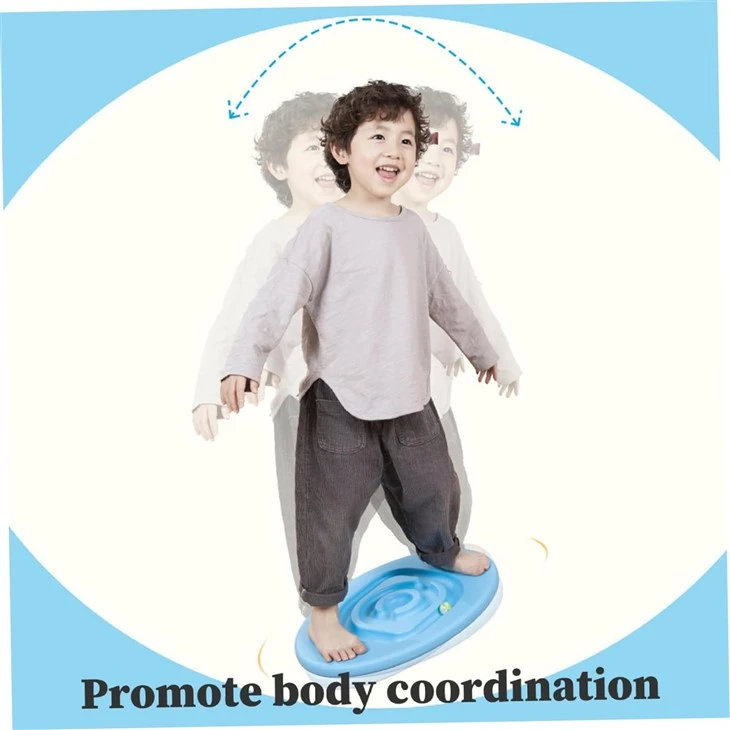

Balance boards also offer great sensory input. The movement of the board stimulates the vestibular system, which is responsible for our sense of balance and spatial orientation. This sensory input can be really beneficial for kids, especially those with sensory processing issues. It can help them feel more grounded and focused. Plus, it's a lot more fun than traditional sensory therapies!
Another benefit is that balance boards can enhance a child's motor skills. Whether they're trying to walk across the board, spin on it, or perform other movements, they're using their fine and gross motor skills. Fine motor skills involve using the small muscles in the hands and fingers, while gross motor skills involve the larger muscles in the arms, legs, and torso. By using a balance board, kids are getting a full - body workout that helps these skills develop.
Safety Considerations
Now, I know what you're thinking. "Are balance boards safe for kids?" Well, like any physical activity, there are some safety considerations. First of all, it's important to choose the right balance board for your child's age and skill level. For younger kids, a board with a lower center of gravity and a wider base is usually safer. The Montessori Waldorf Toy is a great option for older kids who have more developed balance skills.
Always supervise your child when they're using a balance board. Accidents can happen, especially if a child gets over - excited or tries to do something too advanced for their skill level. Make sure the area around the balance board is clear of any obstacles that could cause a fall. A soft surface, like a carpet or a yoga mat, can also help reduce the risk of injury if a child does fall.
It's also a good idea to start slow. Let your child get used to the feeling of standing on the board before they start trying more complex movements. And don't forget to teach them proper form. Standing with their feet shoulder - width apart and keeping their knees slightly bent can help them maintain better balance.
Age - Appropriate Use
The suitability of balance boards really depends on the child's age. For toddlers, as I mentioned earlier, a Wobble Board for Toddlers is a great choice. These boards are usually smaller and more stable, making them easier for little ones to use. Toddlers can start by just standing on the board with some support from an adult. As they get more comfortable, they can try taking a few steps or swaying from side to side.
For preschoolers and early elementary - aged kids, a Kids Balance Board is more appropriate. These boards are a bit more challenging and allow kids to perform a wider range of movements. They can try hopping on and off the board, or even doing some simple tricks.
Older kids, like those in middle school and high school, can handle more advanced balance boards. The Montessori Waldorf Toy is designed for kids who have already developed a good level of balance and coordination. They can use it for more complex balance exercises, like balancing on one foot or doing dynamic movements.
When Balance Boards Might Not Be Suitable
While balance boards have many benefits, there are some cases where they might not be the best choice. If a child has a physical condition that affects their balance or mobility, such as a neurological disorder or a joint problem, it's important to consult with a doctor before using a balance board. In some cases, the board could potentially cause more harm than good.
Also, if a child is overly fearful or anxious about using the balance board, it might not be the right time to introduce it. Forcing them to use it could create a negative association with physical activity. Instead, try to build their confidence gradually, maybe by starting with other balance - related activities, like walking on a low balance beam.
Our Balance Boards
As a balance board supplier, I'm really proud of the products we offer. Our Montessori Waldorf Toy, Wobble Board for Toddlers, and Kids Balance Board are all made from high - quality materials that are safe for children. We've designed them with the specific needs of different age groups in mind, so you can be sure you're getting the right product for your child.
Our balance boards are not only functional but also really fun. They come in a variety of colors and designs that kids will love. Whether your child is into bright, bold colors or more natural, earthy tones, we've got something for them.
Conclusion
In conclusion, balance boards can be a great addition to a child's playtime and physical development. They offer a wide range of benefits, from improving balance and coordination to enhancing sensory input and motor skills. However, it's important to choose the right board for your child's age and skill level and to follow proper safety precautions.
If you're interested in purchasing a balance board for your child, I'd love to chat with you. We can discuss which board would be the best fit for your child's needs. Feel free to reach out to start a conversation about procurement. Let's help your child have fun while developing important physical skills!
References
- American Academy of Pediatrics. (2020). Physical Activity Guidelines for Children and Adolescents.
- Sensory Integration International. (2019). The Importance of Vestibular Input in Child Development.
- National Association for Sport and Physical Education. (2018). Motor Skill Development in Children.