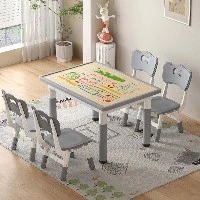
In a young child's developmental journey, cultivating focus and curiosity is pivotal. Focus forms the bedrock for effective learning and deeper understanding of the world, enabling children to concentrate amidst diverse information and activities, thereby better absorbing knowledge and skills. Curiosity, meanwhile, acts as the internal drive for children to actively acquire knowledge and discover new things, propelling them to constantly experiment, think, and create.
Sensory toys hold significant potential as unique educational tools. Early Childhood Educational Psychology explicitly states that cognitive development in young children is intrinsically linked to sensory stimulation. During early childhood, the brain is in a rapid development phase. Rich sensory experiences provide crucial stimulation, fostering neural connections and enhancing brain function, which consequently boosts learning capacity and cognitive abilities. Therefore, the thoughtful application of sensory toys can effectively nurture a child's focus and curiosity, laying a solid foundation for their future development.
This article will delve into three core strategies for effectively fostering focus and curiosity through sensory toys: innovative play design, environmental crafting, and tailored application for individual differences. The section on innovative play design will analyze limitations of traditional approaches, propose design principles, and provide concrete examples. Environmental crafting will be explored through both physical and psychological dimensions. Addressing individual differences will examine variations in age, temperament, and ability, proposing corresponding application strategies. Finally, the findings will be summarized, research limitations and future directions discussed, and actionable guidance offered for early childhood educators and parents.
How can the gameplay of sensory toys be innovatively designed to deeply stimulate children's concentration and desire to explore?
(I) Analysis of Limitations in Traditional Sensory Toy Play
Common Traditional Play Types and Their Characteristics
Traditional sensory toy play tends to be relatively simplistic. Common examples include basic tactile exploration, where young children simply touch the toy's surface to feel its texture, and simple shaking for sound, where shaking the toy produces noise, offering only an initial auditory experience. These forms of play are straightforward but often lack depth and variation.
Case studies from Toy Design and Application for Young Children illustrate how traditional play struggles to hold children's attention for extended periods. For instance, a typical cloth doll might initially attract a child through its soft texture, but interest often wanes quickly as this singular tactile experience fails to sustain their drive to explore.
Insufficient Cultivation of Attention Span and Exploratory Drive
From the perspective of child psychological development, young children's innate curiosity and thirst for knowledge grow significantly with age. Traditional play methods struggle to meet these evolving psychological needs, frequently resulting in children becoming easily distracted during play. When toy play lacks sufficient challenge and intrinsic fun, children find it difficult to delve deeper into the toy's potential. They struggle to become fully immersed in the game, consequently hindering the development of both sustained focus and a strong desire to explore.
(II) Principles for Designing Innovative Play Methods
Principle of Engagement
Play that captures a child's interest is fundamental for holding their attention. Research from Theories of Child's Play demonstrates a positive correlation between the fun factor of a game and a child's level of involvement. When play is genuinely engaging, children actively immerse themselves, eagerly exploring and experimenting. For instance, designing a shape-shifting sensory toy allows children to discover its changing forms during interaction. This novel experience sparks their curiosity, motivating them to spend more time uncovering the toy's secrets, thereby enhancing their concentration.
Principle of Appropriate Challenge
Play incorporating a suitable level of challenge helps develop a child's focus and problem-solving abilities. Studies in Early Childhood Cognitive Development indicate that challenging tasks stimulate cognitive activity and promote brain development. When designing play, the challenge level should align with the child's age and capabilities. For example, a sensory puzzle toy designed for children in the middle preschool years should offer moderate difficulty-neither too simple to cause boredom nor too complex to induce frustration. Completing the puzzle requires focused observation of patterns and strategic thinking about assembly, effectively exercising both concentration and cognitive skills.
Principle of Interaction
Encouraging interaction between the child and the toy, peers, or adults significantly enriches the play experience and enjoyment. Social Interaction and Learning in Early Childhood highlights the crucial role of interaction in developing language skills, emotional exchange, and cooperative abilities. For example, designing a collaborative sensory exploration game where children work together on a task-such as locating hidden specific items in different places through touch and verbal communication-requires them not only to use their senses but also to communicate and cooperate with peers. This process not only boosts concentration but also fosters teamwork and language expression.
(III) Examples of Innovative Play Design
Multi-Sensory Integration Play
Combining multiple sensory stimuli provides richer experiences for young children. For example, a "Mystery Garden" sensory toy could feature flowers of varying textures (silk, plush, plastic, etc.), allowing children to feel differences in softness and smoothness through touch. Simultaneously, each flower could incorporate sound modules that play blooming or birdsong effects when touched. Furthermore, the toy's intricate patterns would encourage visual observation of colors and shapes. This integrated sensory approach enables holistic understanding of objects while sustaining focused exploration through novelty.
Narrative Scenario Play
Embedding sensory toys within story contexts sparks imagination and discovery. Take a "Forest Expedition" scenario: teachers create simulated woodland settings where sensory items are concealed. Children role-play as explorers, using tactile (tree bark textures), olfactory (flower scents), and auditory (bird calls) cues to locate hidden "treasures." Research indicates such narrative immersion extends attention spans and stimulates creative problem-solving as children actively investigate their environment.
Competitive & Collaborative Play
Structured group challenges cultivate concentration, teamwork, and healthy competition. In a "Sensory Relay Race," teams complete sequential tasks-like identifying specific scents or recognizing hidden objects by touch-before passing the turn. The first team to finish wins. Alternatively, cooperative "Sensory Castle" building requires joint planning and role delegation to construct structures using varied sensory materials. These activities teach focused effort during competition and communication skills during collaboration, holistically developing multiple competencies.
Creating Optimal Environments for Sensory Toys to Enhance Children's Focus and Exploration
(I) Physical Environment Design
Spatial Layout
Strategic placement of sensory toys is essential. Establishing dedicated sensory exploration zones provides children with independent, focused play spaces. Research in Kindergarten Environment Design indicates that well-planned layouts minimize distractions, enabling deeper engagement in play and discovery. These zones should be spacious and well-lit, isolated from other activity areas. Additionally, toys should be grouped by sensory type and function-for example, tactile toys in one section and auditory toys in another-to facilitate children's independent selection and use.
Color and Decoration
Color significantly influences children's emotions and attention. Decorating spaces with rich yet soft hues creates inviting, stimulating atmospheres. Color psychology research demonstrates distinct psychological effects: blue induces calm and relaxation, ideal for quiet reflection; yellow sparks energy and creativity, effectively fueling exploratory drives. When designing sensory zones, incorporate patterns and elements related to sensory experiences-such as stars, flowers, or animals-to enhance environmental appeal and engagement.
Lighting and Sound
Adequate, appropriate lighting forms the foundation for safe exploration. Harsh or dim lighting strains young eyes and disrupts concentration. Ensure sensory zones utilize natural light or soft artificial illumination. Equally important is sound control: reducing ambient noise helps children maintain focus during play. Gentle background elements-like classical music or nature sounds-can cultivate a relaxed, joyful atmosphere, promoting relaxation and deeper immersion in exploratory activities.
(II) Fostering a Supportive Psychological Environment
Encouragement and Support
Adult encouragement serves as the fundamental drive for children's exploration. Positive Psychology in Early Childhood emphasizes that affirmation builds confidence and motivates discovery. When children encounter challenges while exploring sensory toys, adults should offer timely guidance and acknowledge their efforts. For example, if a child struggles with a puzzle, saying, "You're trying so hard-take a closer look, and you'll find the right spot!" reinforces their persistence. Such validation helps children feel recognized and supported, fueling their confidence to continue exploring.
Respect and Understanding
Every child possesses unique traits and exploratory styles. Adults should honor these individual differences without excessive intervention. Relevant educational theories note that respecting autonomy cultivates focus and curiosity. For instance, some children prefer solitary exploration-grant them ample space and time. Others thrive when sharing discoveries with peers-encourage collaborative interaction. Only by honoring children's choices can they fully unlock their potential in a free, supportive atmosphere.
Collaboration and Communication
Promoting peer and child-adult dialogue broadens perspectives and sparks innovative exploration. Research in Social Interaction and Cognitive Development in Early Childhood shows cooperative exchange sharpens concentration and expressive skills. During sensory activities, adults can facilitate group discussions where children share observations and experiences. For example, after playing with the "Mystery Garden" sensory toy, gather children to discuss favorite textures, sounds, or colors. Through dialogue, they gain multidimensional insights while honing linguistic and cognitive abilities.
How to Effectively Cultivate Focus and Exploratory Desire in Young Children Based on Individual Differences Using Sensory Toys?
(I) Manifestations of Individual Differences in Young Children
1. Age Differences
Children of different age groups exhibit significant variations in physical development, cognitive levels, and interests. Child Development Psychology (Johnson, 2020) provides detailed descriptions of age-specific characteristics. Preschoolers in junior classes typically have weaker physical coordination, shorter attention spans, and strong curiosity about novel objects, though they often lack the capacity for deep exploration. Consequently, sensory toys selected for this group should be simple, safe, and easy to manipulate, such as soft fabric toys or rattles producing basic sounds. Children in middle classes show improved physical development and cognition, possessing basic manual dexterity and thinking skills. They can be offered toys presenting moderate challenges, like puzzles or building blocks. Senior class children demonstrate more active thinking, heightened curiosity, and a stronger desire for knowledge. More complex sensory exploration kits, such as science experiment toys, can be selected to satisfy their exploratory needs.
2. Personality Differences
Children exhibit diverse personality traits; some are active and energetic, while others are introverted and quiet. Studies in personality psychology indicate differences in how focus and exploratory desire manifest across personality types. Active children often prefer dynamic activities and show enthusiasm for new things, though they may struggle with patience and sustained attention. For these children, sensory toys requiring focused attention and manual operation-such as bead threading or puzzles-can help them practice concentration during play. Introverted, quiet children typically lean towards independent thinking and calm activities. They often possess relatively better focus but may lack the initiative to explore. For this group, toys stimulating interest and encouraging expression-like story machines or role-play toys-can help motivate active participation in exploration and communication.
3. Ability Differences
Children also differ in their sensory perception, fine motor skills, and cognitive abilities. Accurate assessment of a child's ability level, using relevant assessment tools and research methodologies, provides a basis for individualized education. For instance, some children exhibit strong sensory perception, showing high sensitivity to sounds, colors, or smells, while others may be less sensitive. For children with weaker sensory perception, targeted sensory training toys-such as tactile balls or scent bottles-can help enhance sensory acuity. Children with underdeveloped fine motor skills benefit from toys promoting hand-eye coordination and dexterity, like building blocks or modeling clay. For those needing support in cognitive development, toys fostering logic and problem-solving-such as strategy games or science experiment kits-can effectively guide thinking and solution-finding.
(II) Sensory Toy Implementation Strategies Based on Individual Differences
1. Age-Adapted Approaches
Selecting developmentally appropriate sensory toys is essential for cultivating focus and exploratory desire. For junior class children, simple, safe, and easily operable toys allow effortless engagement, building confidence and curiosity through successful experiences. Soft fabric toys, for instance, enable free tactile exploration of varied textures, while basic rattles attract auditory attention and spark sound discovery. Middle class children benefit from puzzles and building blocks that develop fine motor skills and cognitive abilities. The process of pattern recognition and spatial reasoning during puzzle-solving enhances concentration and problem-solving capacities. Senior class children thrive with scientific exploration kits that satisfy their curiosity about the natural world. Simple chemistry experiments demonstrating material transformations foster conceptual understanding and investigative mindsets. Documented cases across preschools confirm that age-targeted toy selection significantly improves sustained attention and exploratory behaviors.
2. Personality-Guided Techniques
Tailored facilitation strategies maximize educational outcomes for different personality types. For energetic children, focus-intensive toys like bead threading require sustained attention and hand-eye coordination. Educators can scaffold this process through timely encouragement and guidance, helping them persist through challenges. Reserved children respond better to toys stimulating self-expression, such as audio story players that ignite imagination and invite sharing. Role-play sets allow safe exploration of social scenarios, strengthening verbal and interpersonal skills. Research by Smith (2022) demonstrates measurable progress in both personality types when guided by these techniques, with kinetic learners showing improved task persistence and quiet children demonstrating increased exploratory initiative.
3. Ability-Specific Development Plans
Individualized programs addressing capability gaps effectively enhance focus and curiosity. Children with underdeveloped sensory perception benefit from targeted tools like tactile balls and scent jars. Systematic exposure to varied textures (smooth/rough/soft) and olfactory discrimination exercises sharpen sensory processing. Those with delayed fine motor skills improve through block construction and modeling clay, activities requiring balance and spatial reasoning that simultaneously develop physical and cognitive abilities. For children needing cognitive support, strategy games and science kits promote logical thinking. Chess, for example, cultivates anticipatory planning and decision-making through gameplay. Empirical findings confirm that such ability-specific interventions yield measurable gains across developmental domains when consistently implemented.